
One yard of fabric is the sweet spot for beginner sewing: enough to make something satisfying, not so much that you feel like you are wrestling a bedsheet through your machine. If you are brand-new, this list is your gentle nudge to actually sew today, not just save tutorials for “someday.”
Below are 10 easy projects you can make with one yard of fabric or less. I will tell you what fabric works best, what skills you will practice, and a few little “save your sanity” tips I wish someone had told me when I started.
Before you start
Make one yard behave
When a pattern or tutorial says “one yard,” it often assumes 44 to 45 inch wide fabric (think quilting cotton). That is common, but not universal. Many garment patterns are drafted for 54 to 60 inch widths, or they list multiple width options.
- Check the width requirement on your pattern or tutorial before you buy fabric.
- Prewash anything that might shrink (cotton, linen, rayon). Then press it flat so your cutting is accurate.
- Square up one end before you measure and cut. Most fabric store cuts are close, not perfect.
- New sewist tip: if your fabric slides around, press with starch or use a few pattern weights (a couple of canned goods work).
My “afternoon project” supplies
- Universal needle (size 80/12 is a great default for quilting cotton)
- All-purpose polyester thread (and 100% cotton thread when a project calls for it)
- Iron and ironing board (yes, it counts as a sewing tool)
- Seam ripper, because you are brave and learning
- Basic ruler or measuring tape
1) Reversible bandana bib
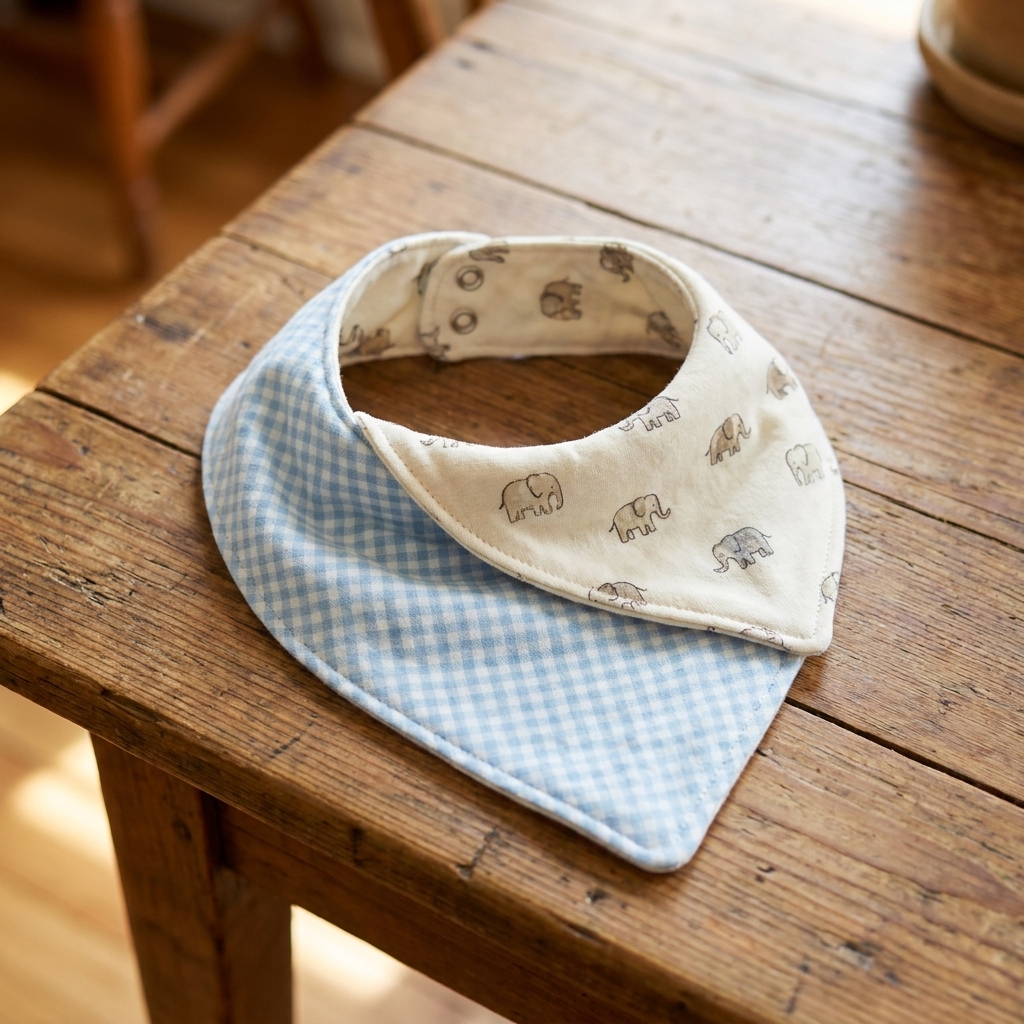
If you want a fast win, this is it. A bandana bib is mostly straight stitching with one gentle curve, and it is adorable even if your topstitching is a little wiggly.
- Typical yardage: 1/4 yard to 1/2 yard (you can often get 2 to 4 bibs from one yard)
- Width assumption: works well on 44 to 45 inches wide
- Fabric: quilting cotton, flannel, cotton jersey, or cotton double gauze
- Notions: snaps, velcro, or a small piece of rib knit for a neckband
- Skills you practice: sewing curves, turning right side out, topstitching
- Beginner-friendly tip: clip curves (little snips into the seam allowance) so the bib lays flat after turning.
2) Envelope pillow cover
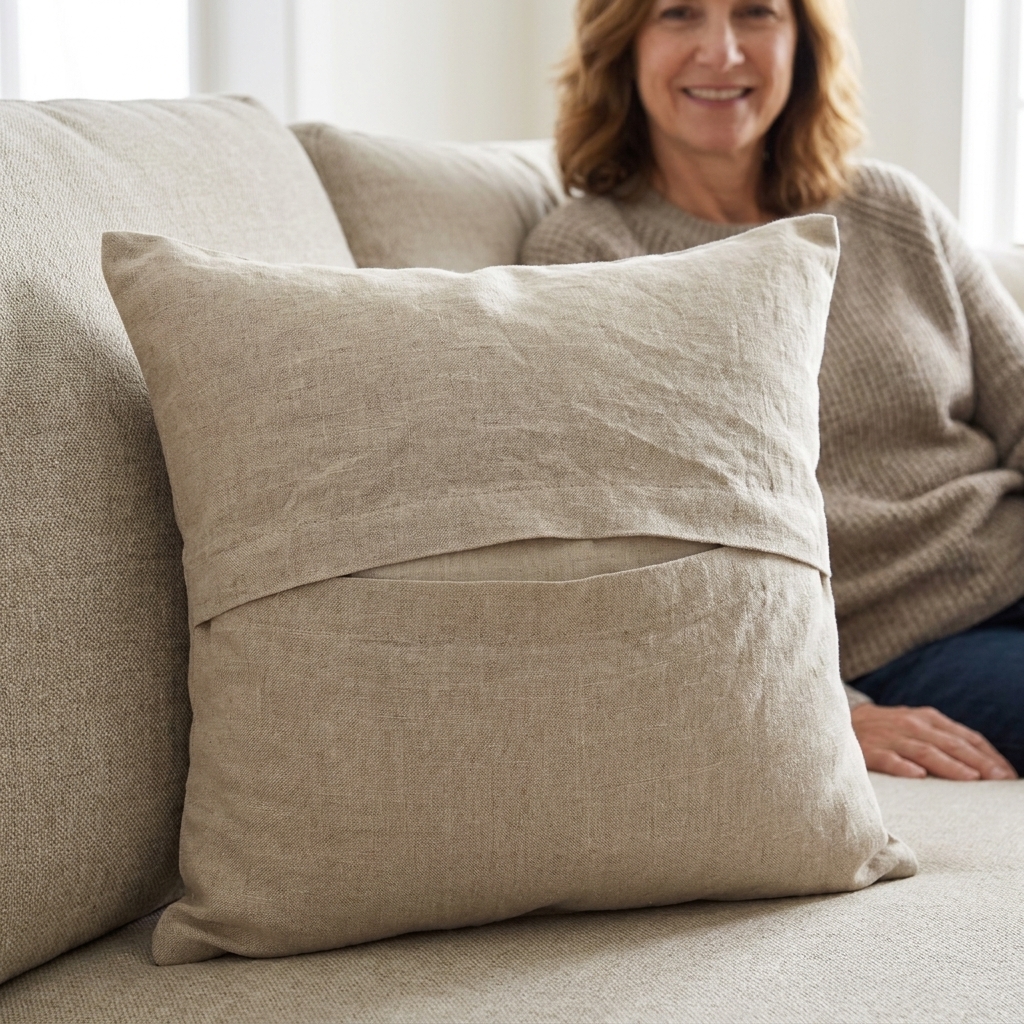
Pillow covers are confidence builders because they look polished, they use straight seams, and no one is trying it on and judging your fit.
- Typical yardage: 3/4 yard to 1 yard for a 16 to 18 inch cover (more if you want a deep envelope overlap or fussy-cutting)
- Width assumption: easiest on 44 to 45 inches wide; 54 to 60 inches wide gives you more layout options
- Fabric: home decor cotton, canvas, linen blend, or quilting cotton with interfacing for structure
- Great for: 16 inch or 18 inch pillow forms (size depends on your envelope overlap)
- Skills you practice: hemming, measuring, crisp corners
- Beginner-friendly tip: press your hems before sewing. Pressing is what makes handmade look polished.
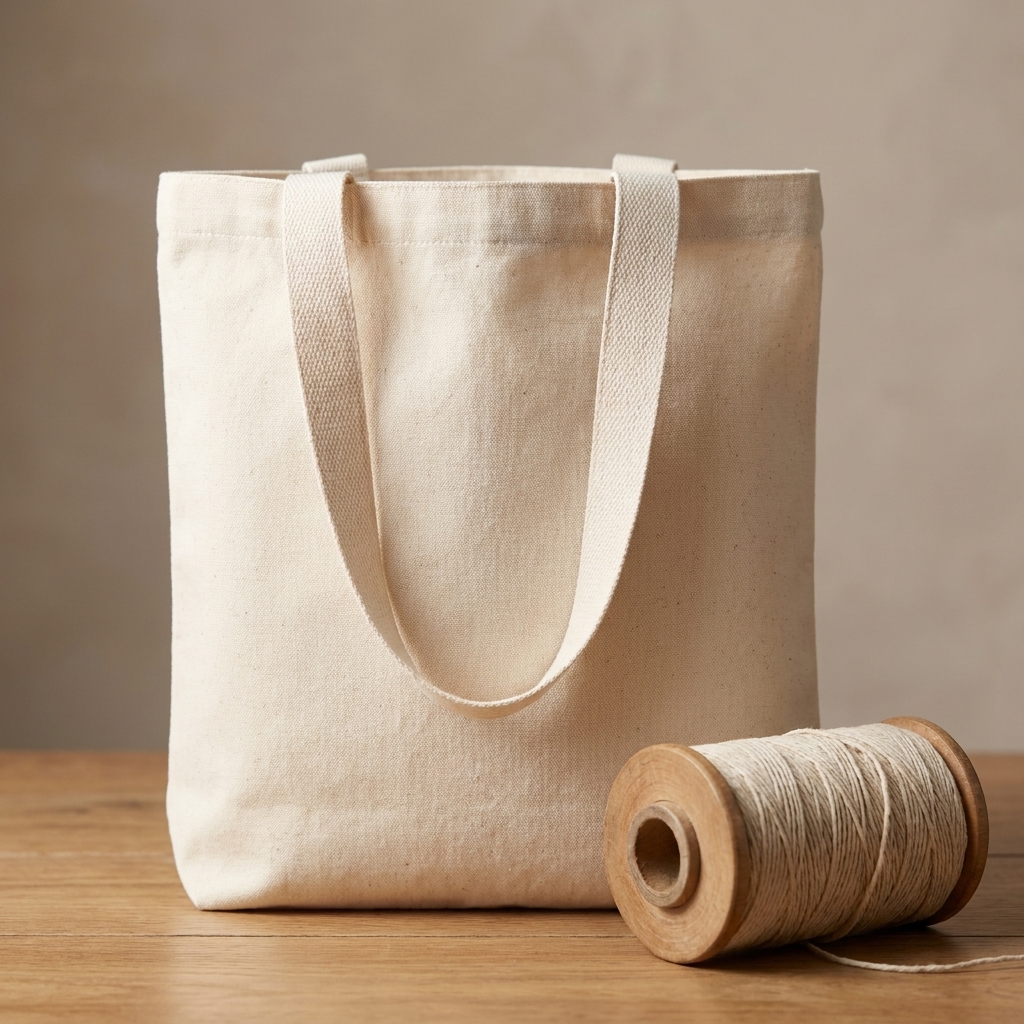
3) Simple tote bag
A tote is a rite of passage. It is also secretly a sampler of useful skills: long seams, straps, and turning big pieces right side out.
- Typical yardage: 1/2 yard to 1 yard depending on tote size and whether it is lined
- Width assumption: 44 to 45 inches wide is usually fine for a basic tote; long straps and a full lining can push you closer to a yard
- Fabric: canvas, denim, duck cloth, or quilting cotton plus fusible interfacing
- Skills you practice: seam allowances, topstitching, strap placement
- Beginner-friendly tip: if you want the bag to stand up, add boxed corners and use a sturdier fabric.
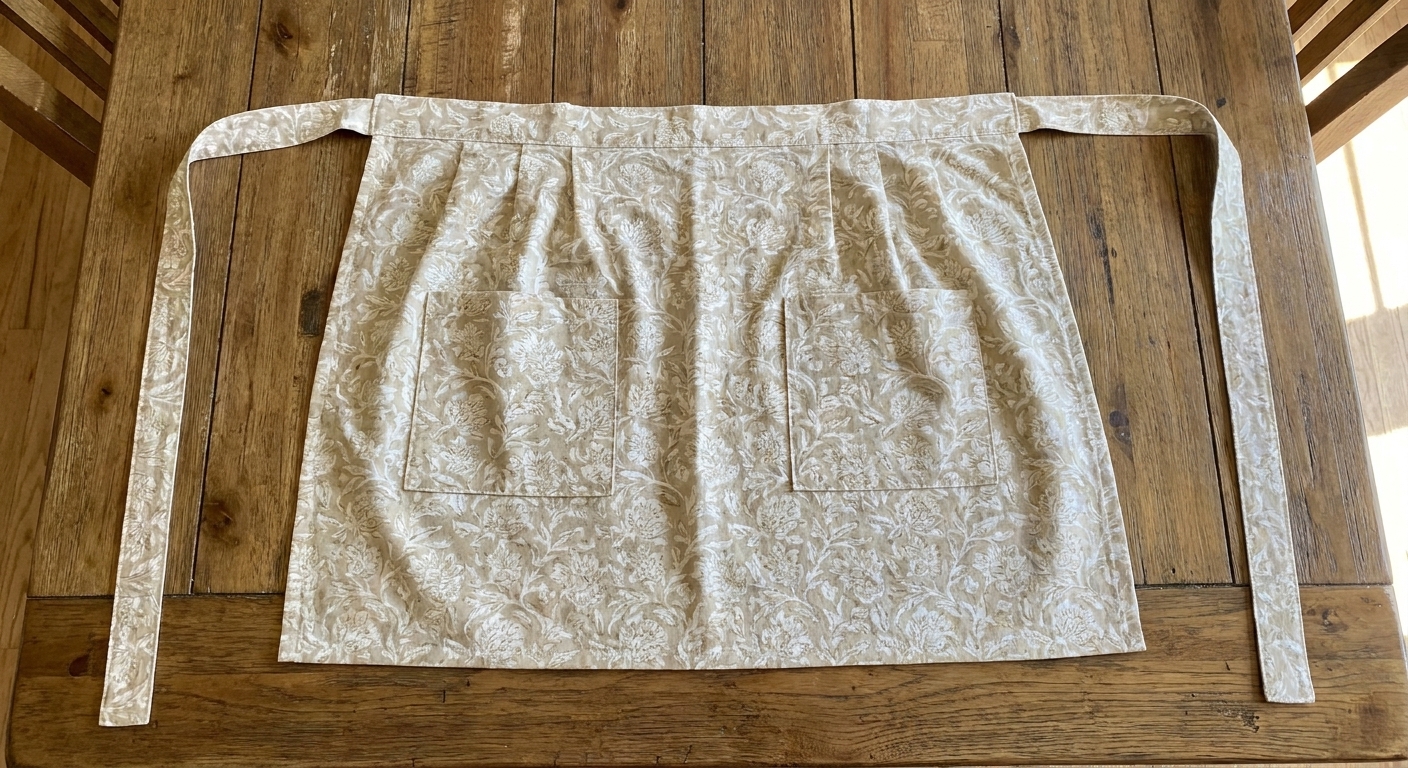
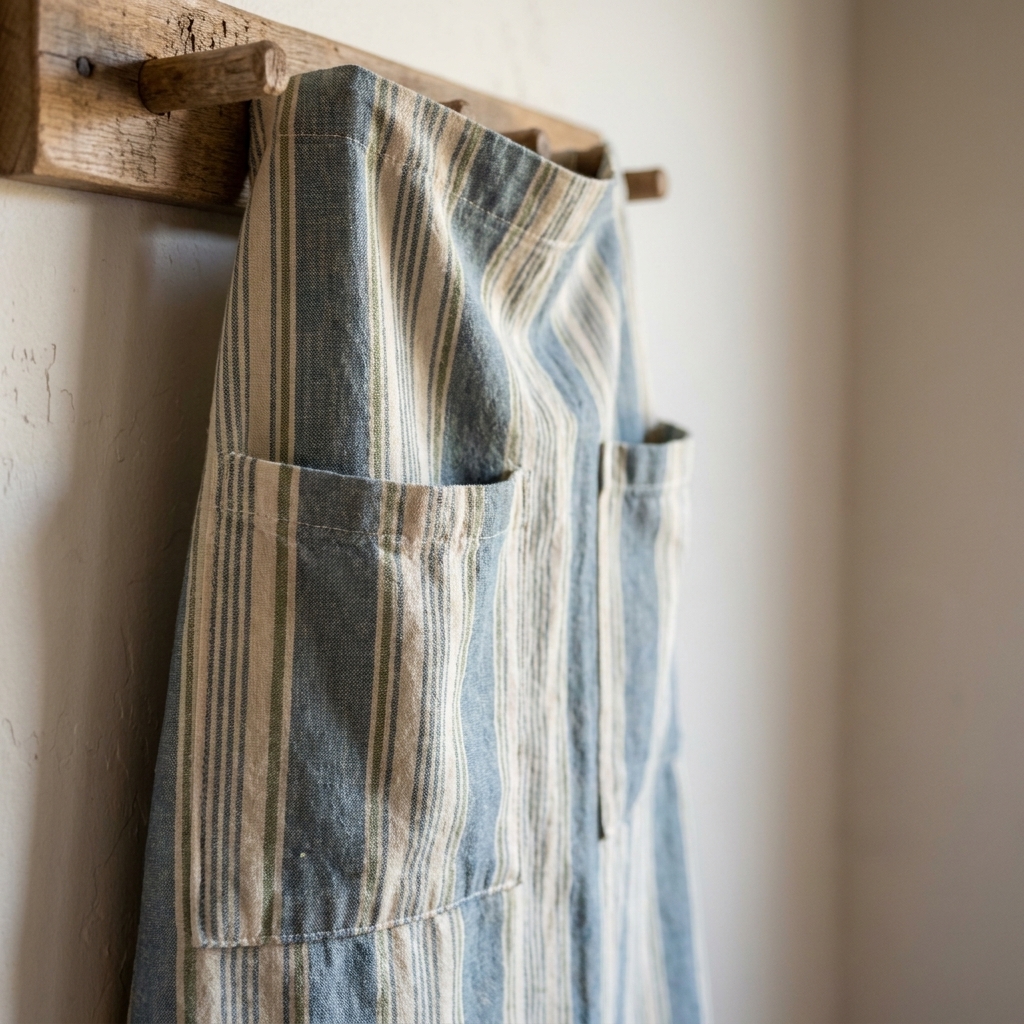
4) Half apron with pockets
An apron is forgiving, adjustable, and genuinely useful. Big pockets also hide a multitude of “my seam line drifted a bit” moments.
- Typical yardage: 3/4 yard to 1 yard (ties, ruffles, and extra-long aprons can require more)
- Width assumption: 44 to 45 inches wide; if you want a wider apron front, 54 to 60 inches wide makes it easier
- Fabric: cotton twill, linen, canvas, or sturdy quilting cotton
- Skills you practice: gathering (optional), hemming, making ties, pocket topstitching
- Beginner-friendly tip: reinforce pocket corners with a small triangle stitch or backstitching. Those corners take a beating.
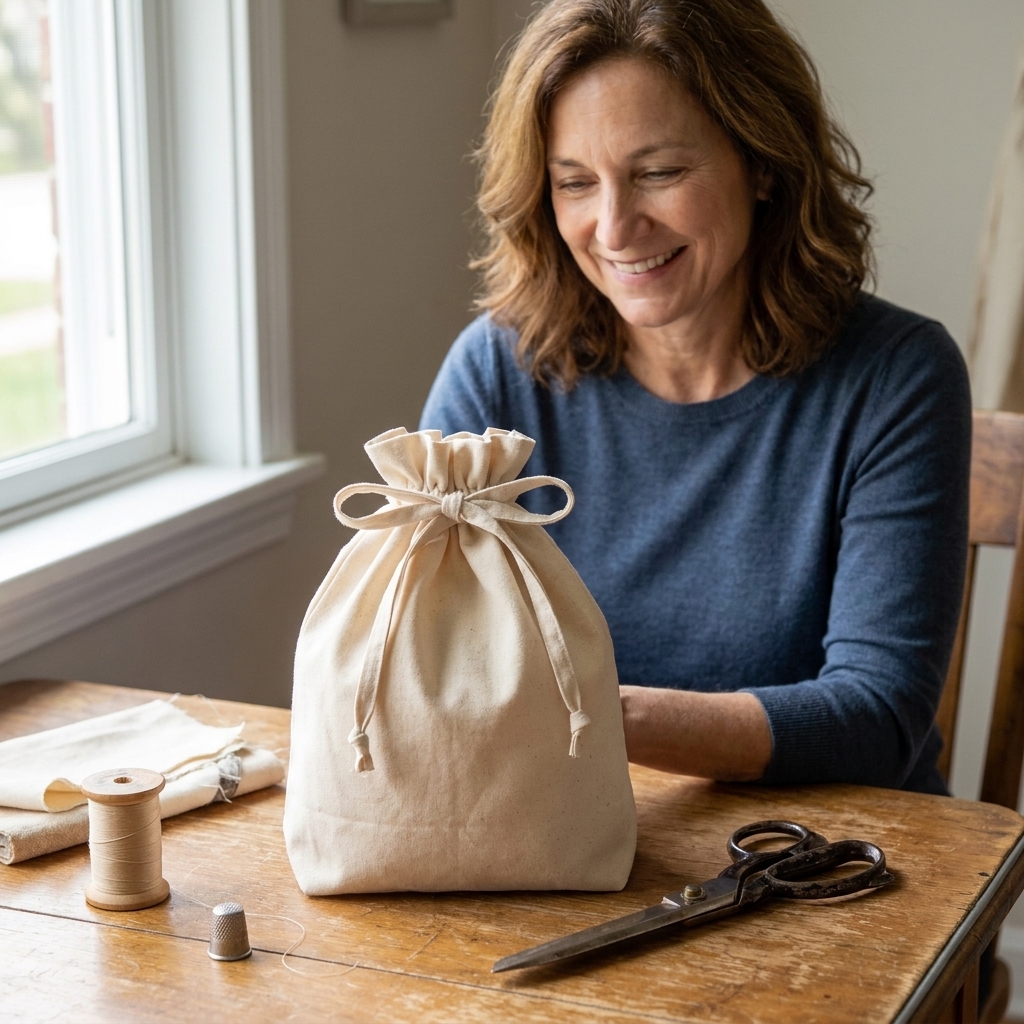
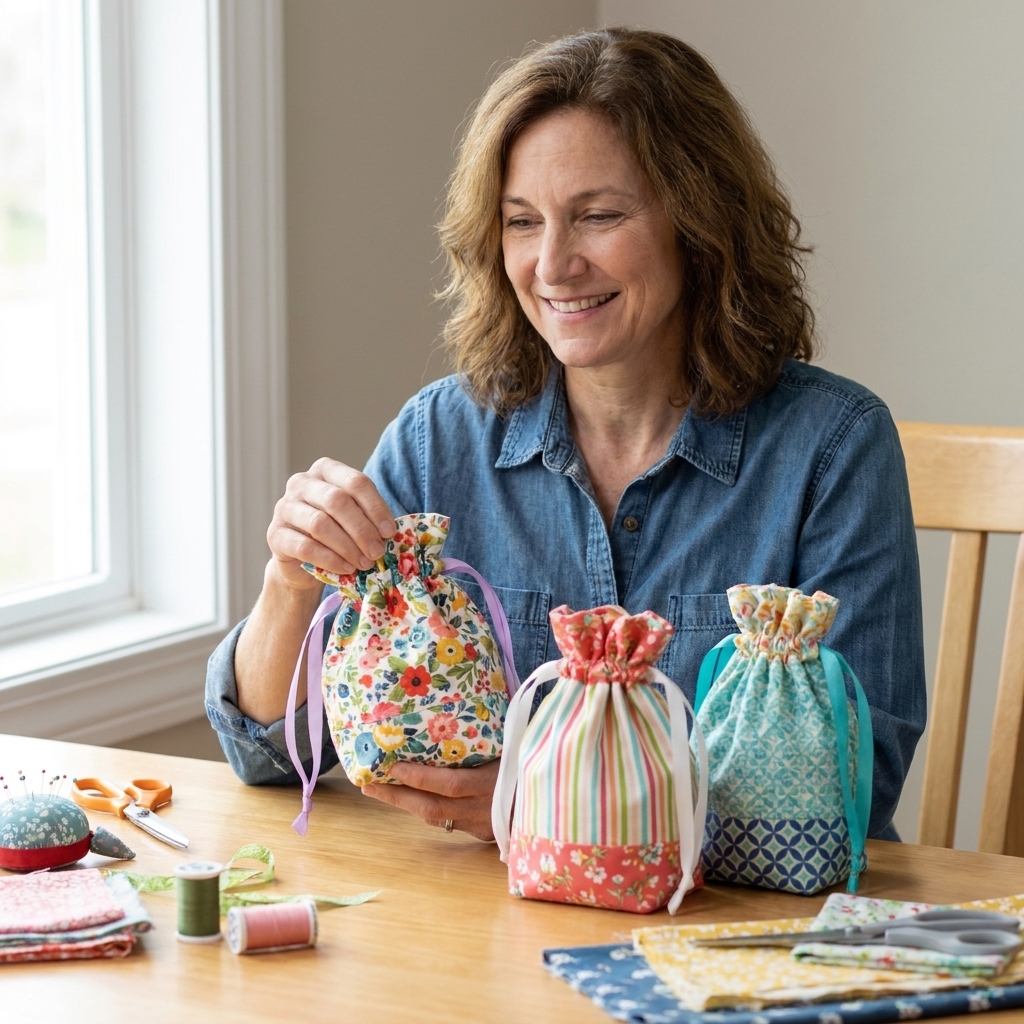
5) Drawstring gift bags
If you only have 45 minutes and want maximum payoff, sew drawstring bags. You will end the afternoon with a stack of finished items, which is basically sewing therapy.
- Typical yardage: 1/4 yard to 1 yard depending on bag size (one yard can make a whole set)
- Width assumption: 44 to 45 inches wide
- Fabric: quilting cotton, lightweight canvas, muslin, or scrap-friendly cotton blends
- Skills you practice: casings, threading a drawstring, batch sewing
- Beginner-friendly tip: use a safety pin on the end of your drawstring to feed it through the casing without losing your mind.
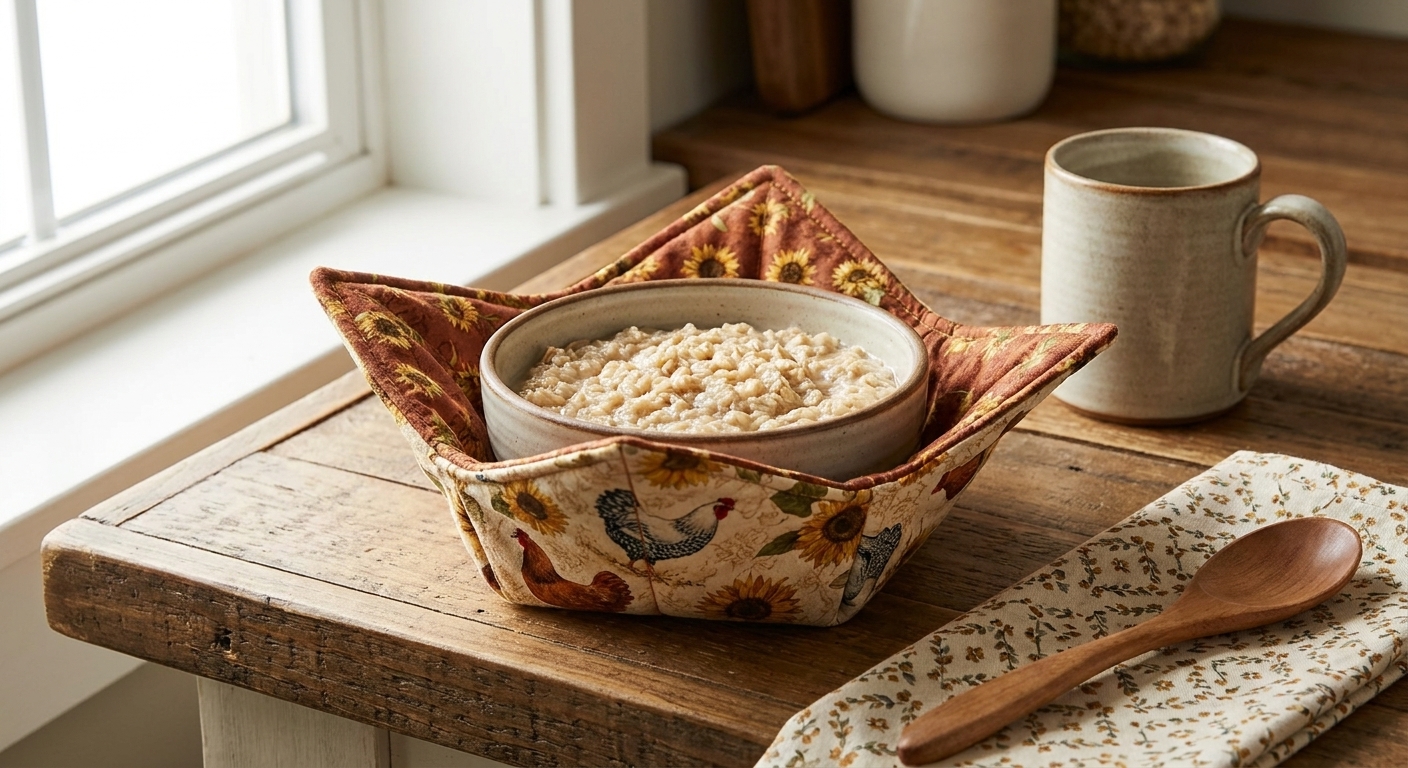
6) Microwave bowl cozy
A bowl cozy is a small project with a big “wow, I made that” feeling. It is also a great way to practice sewing curves without the pressure of clothing.
- Typical yardage: 1/4 yard to 1/2 yard (you can usually make two from one yard)
- Width assumption: 44 to 45 inches wide
- Fabric: 100% cotton fabric and 100% cotton batting
- Safety notes: use 100% cotton thread, skip metallic prints/foils and any trims, and follow your batting manufacturer’s microwave guidance. As always, do not microwave unattended and test in short bursts the first time.
- Skills you practice: curved stitching, trimming, nesting layers
- Beginner-friendly tip: take your time on the curves and keep your seam allowance consistent. Slow is smooth, smooth is fast.
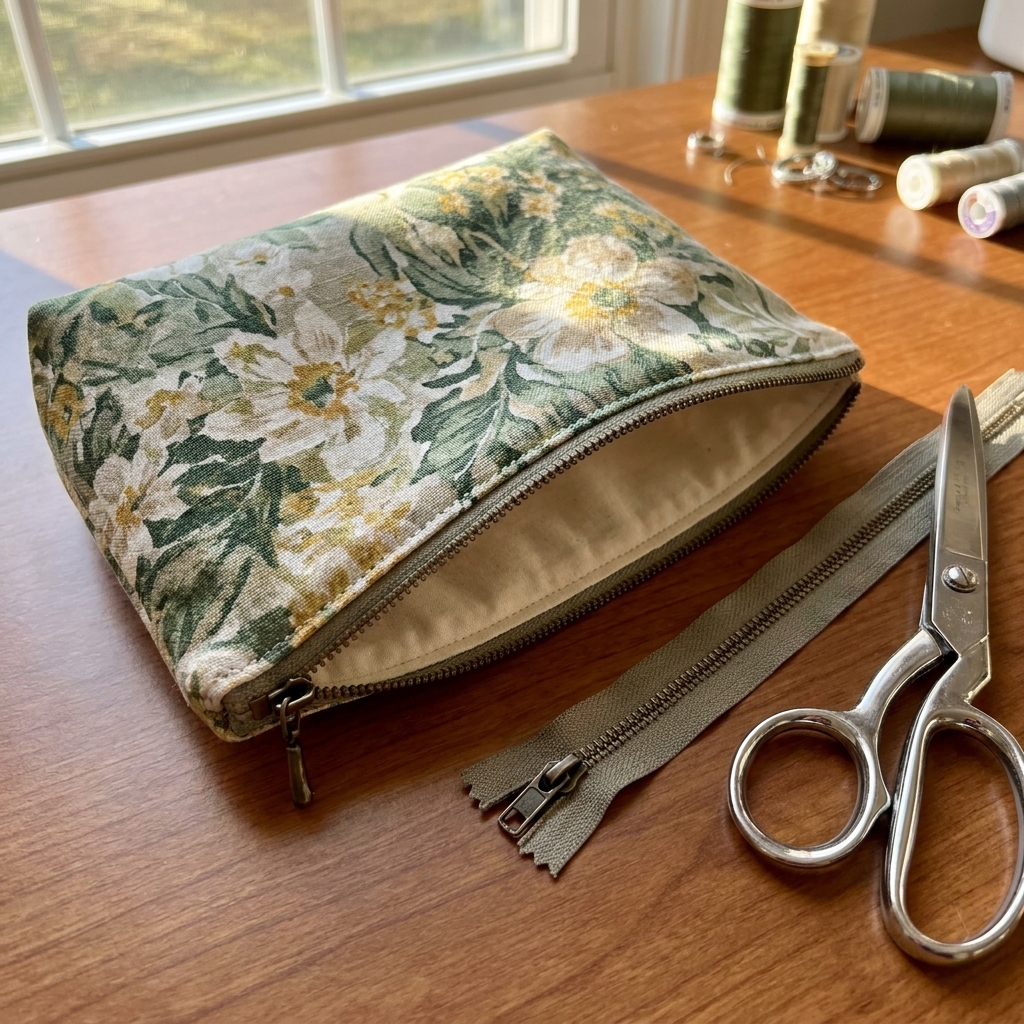
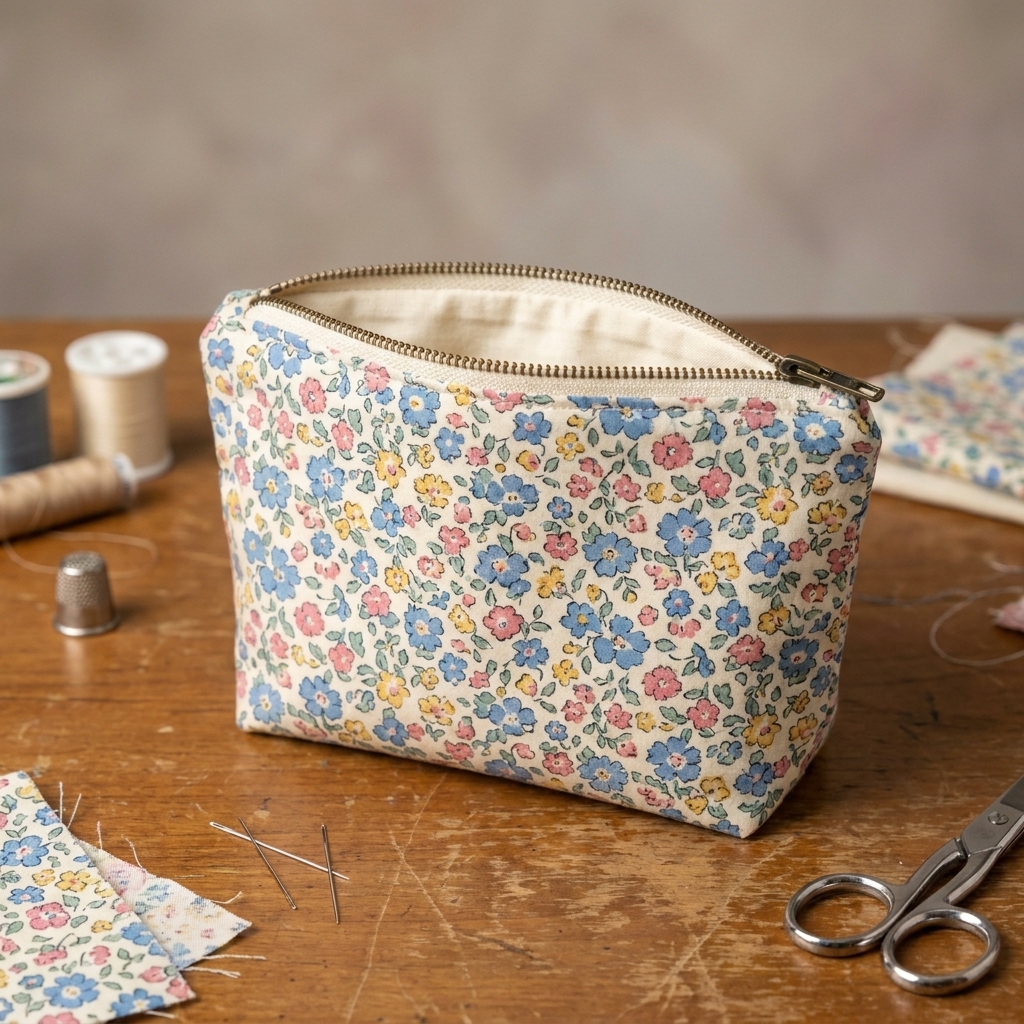
7) Lined zipper pouch
Zippers look scary until you sew one, then you wonder why you avoided them. A simple lined pouch is the perfect first zipper project.
- Typical yardage: 1/4 yard for outer fabric plus 1/4 yard for lining (or use scraps)
- Width assumption: 44 to 45 inches wide
- Fabric: quilting cotton, canvas, or linen blend, plus a lining cotton
- Notions: one zipper (7 to 9 inches is a nice beginner length)
- Skills you practice: zipper installation, boxed corners (optional), lining
- Beginner-friendly tip: press the fabric away from the zipper teeth before topstitching. It helps the zipper from snagging later.
8) Infinity scarf
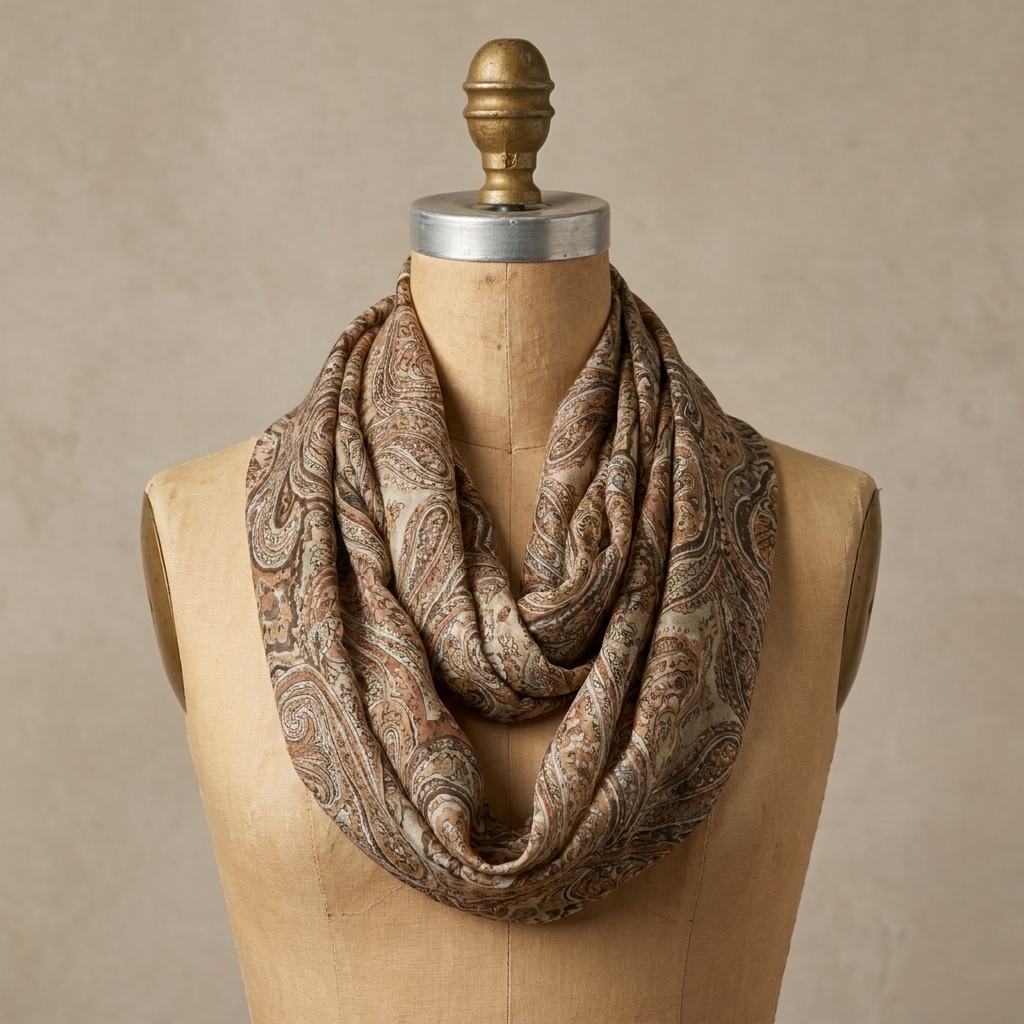
If you want something wearable without dealing with sleeves, necklines, or buttons, an infinity scarf is your best friend.
- Typical yardage: often 1 yard (especially for a fuller loop); you can do 3/4 yard for a shorter or narrower version
- Width assumption: easiest on 54 to 60 inches wide; on 44 to 45 inches wide you may need to piece for extra width
- Fabric: rayon challis, cotton lawn, double gauze, or a soft knit jersey
- Skills you practice: sewing long seams, hemming or using a narrow hem, sewing in the round
- Beginner-friendly tip: if you choose a knit, use a stretch needle and a zigzag stitch so your seams do not pop.
9) Table runner
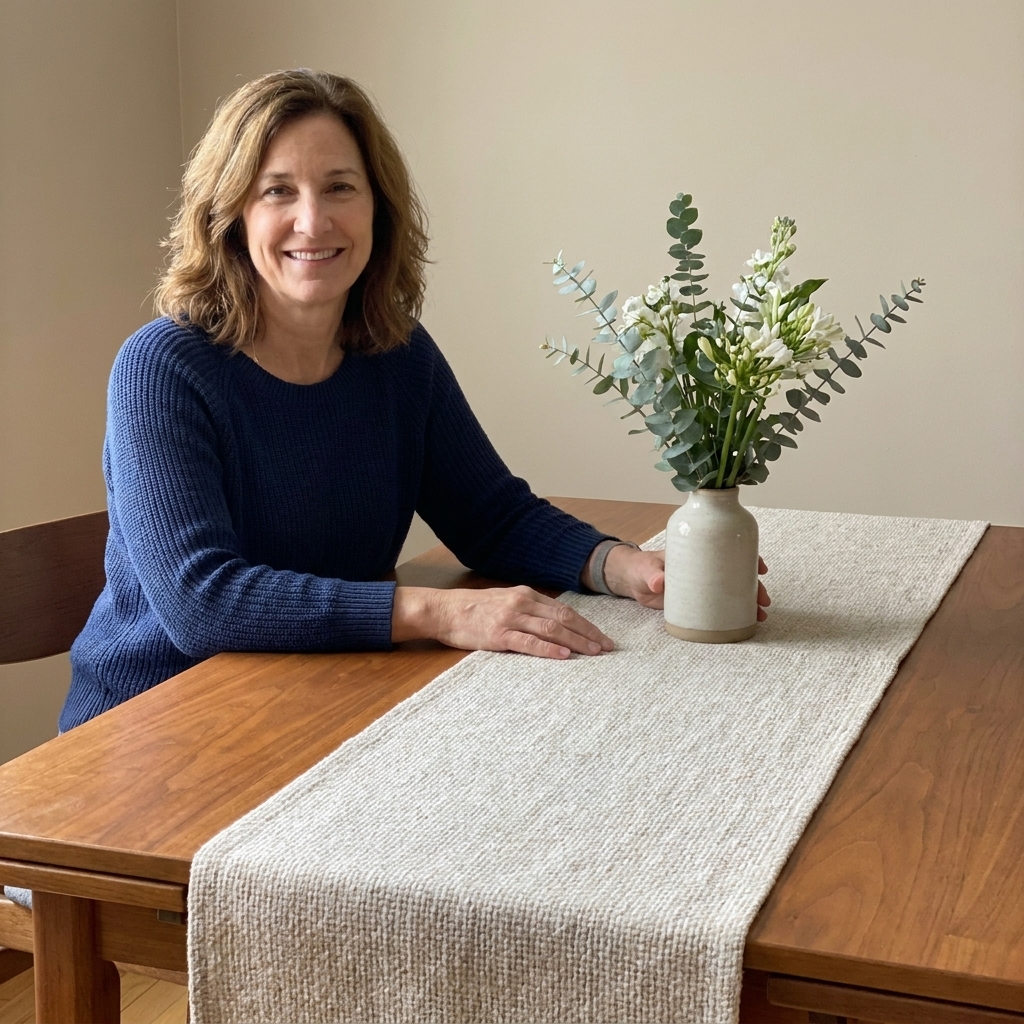
A table runner is basically a long rectangle, which is exactly what beginners need. Add a simple border or use a statement print and it instantly looks intentional.
- Typical yardage: 3/4 yard to 1 yard depending on runner length, hems, and whether it is reversible or quilted
- Width assumption: 44 to 45 inches wide; very long runners may require piecing if you want extra width or a border
- Fabric: quilting cotton, linen, or canvas
- Skills you practice: pressing, edge stitching, corners, optional quilting lines
- Beginner-friendly tip: use a walking foot if you quilt through layers. It helps the fabric feed evenly.
10) Fabric headband
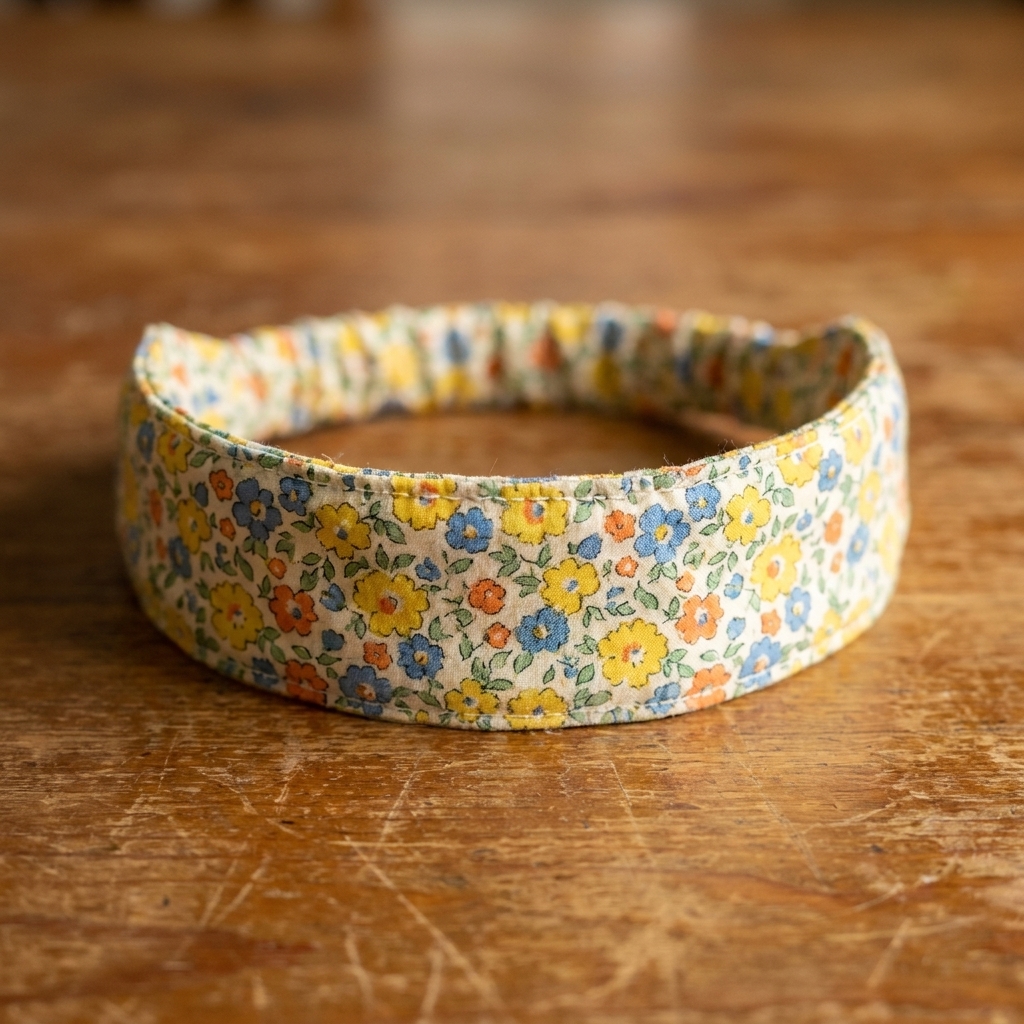
Headbands are quick, giftable, and perfect for practicing neat topstitching on small pieces. Also, they are great stash busters if you have less than a yard.
- Typical yardage: 1/8 yard to 1/4 yard
- Width assumption: any width works
- Fabric: quilting cotton for structure, knit jersey for a softer fit, or double gauze for comfort
- Notions: a small piece of elastic (for scrunch styles) or interfacing (for twist styles)
- Skills you practice: turning tubes, topstitching, elastic insertion
- Beginner-friendly tip: use a safety pin or bodkin to turn narrow tubes, and press as you go for a crisp finish.
Fabric that is easier
If you are staring at the fabric wall feeling overwhelmed, here is my beginner-friendly cheat sheet.
- Easiest to sew: quilting cotton, cotton twill, canvas, linen blends
- A little slippery but worth it: rayon challis, lightweight linen
- Stretchy learning curve: knits (use the right needle and a stretch stitch)
If you want the project to look crisp (tote, apron, pillow), choose a fabric with a bit of body. If you want it to drape (scarf), go lighter and softer.
Cutting tips
- Press first, then cut. Wrinkles steal fabric.
- Cut big pieces first. Then use leftovers for pockets, ties, or straps.
- Mind the direction. If your print has an obvious “up,” keep all pieces oriented the same way.
- Plan for matching. Stripes, plaids, and fussy-cut motifs can eat yardage fast. If you want perfect matching, consider grabbing a little extra.
- Save the selvage edge. It is handy for quick ribbon-like ties in prototypes, and it makes decent test strips for tension.
FAQ
Is one yard enough for a beginner skirt?
Sometimes, but it is variable. A simple elastic-waist skirt is often possible in one yard when you use 58 to 60 inch wide fabric and choose a shorter length, especially in smaller sizes. The safest move is to measure your waist and desired finished length, then do a quick yardage check before you buy.
What does “one yard” mean exactly?
A yard is 36 inches of length off the bolt. Most common fabric widths are 44 to 45 inches (quilting cotton) or 58 to 60 inches (many apparel fabrics). Wider fabric gives you more options with the same yardage.
How do I keep an afternoon project from turning into an all-day project?
Choose one new skill at a time (like a zipper or boxed corners), press at each step, and stop trying to make it perfect. Neat and sturdy beats perfect every single time.
Pick one and sew
If you want my honest suggestion: grab quilting cotton and make the drawstring bags or an envelope pillow cover first. You will get clean, satisfying results fast, and that little burst of confidence is how sewing habits are born.
And if you sew something “wrong” today, congratulations. You are officially a sewist. The seam ripper and I will make you a cup of tea.