
The fastest way to fall in love with sewing is to pick a fabric that wants to cooperate. The fastest way to hate sewing is to pick a fabric that behaves like a wet noodle the second you cut it.
I learned this the hard way while trying to “quickly” hem a thrifted slinky skirt years ago. Spoiler: nothing about it was quick. If you are brand new, choosing the right fabric is not cheating. It is smart.
What makes a fabric beginner-friendly?
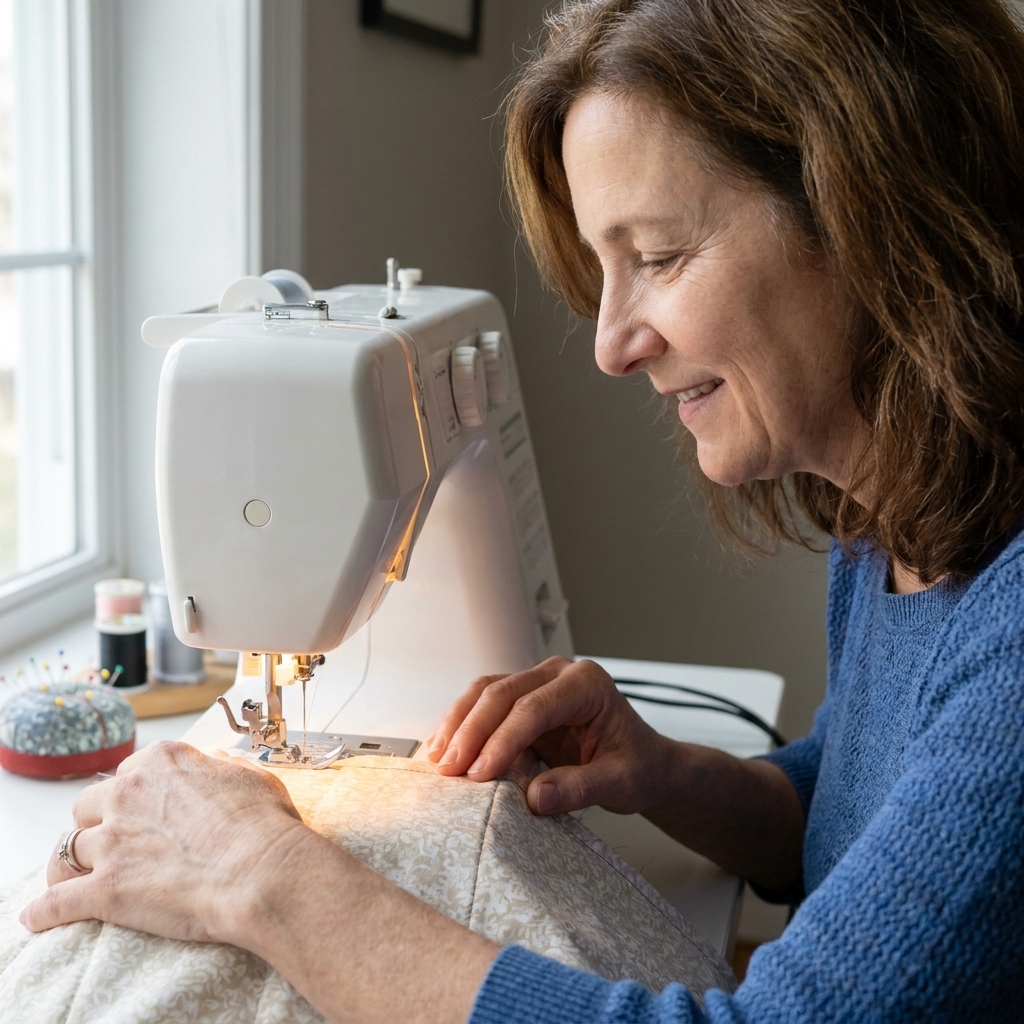
When you are learning, you want fabric that stays put, presses nicely, and feeds through your machine without drama. Here is what I look for when recommending a friendly fabric:
- Woven (not stretchy): Wovens hold their shape, so your seams and hems stay predictable.
- Medium weight: Not so thin it puckers, not so thick it fights your machine.
- Not slippery or shifty: If it slides around on your cutting table, it will slide under your presser foot too.
- Presses well: Pressing is half of sewing. A fabric that holds a crease makes everything easier.
- Forgiving weave: A stable weave is easier to cut, pin, and stitch without distortion.
Quick vocabulary note: when sewists say press, we usually mean lifting the iron up and down to set seams, not scrubbing it back and forth like you are ironing a shirt.
The best fabrics for beginners
These are the fabrics I reach for when I am teaching someone to sew, or when I want a relaxing project that does not require hero-level patience.
1) Quilting cotton
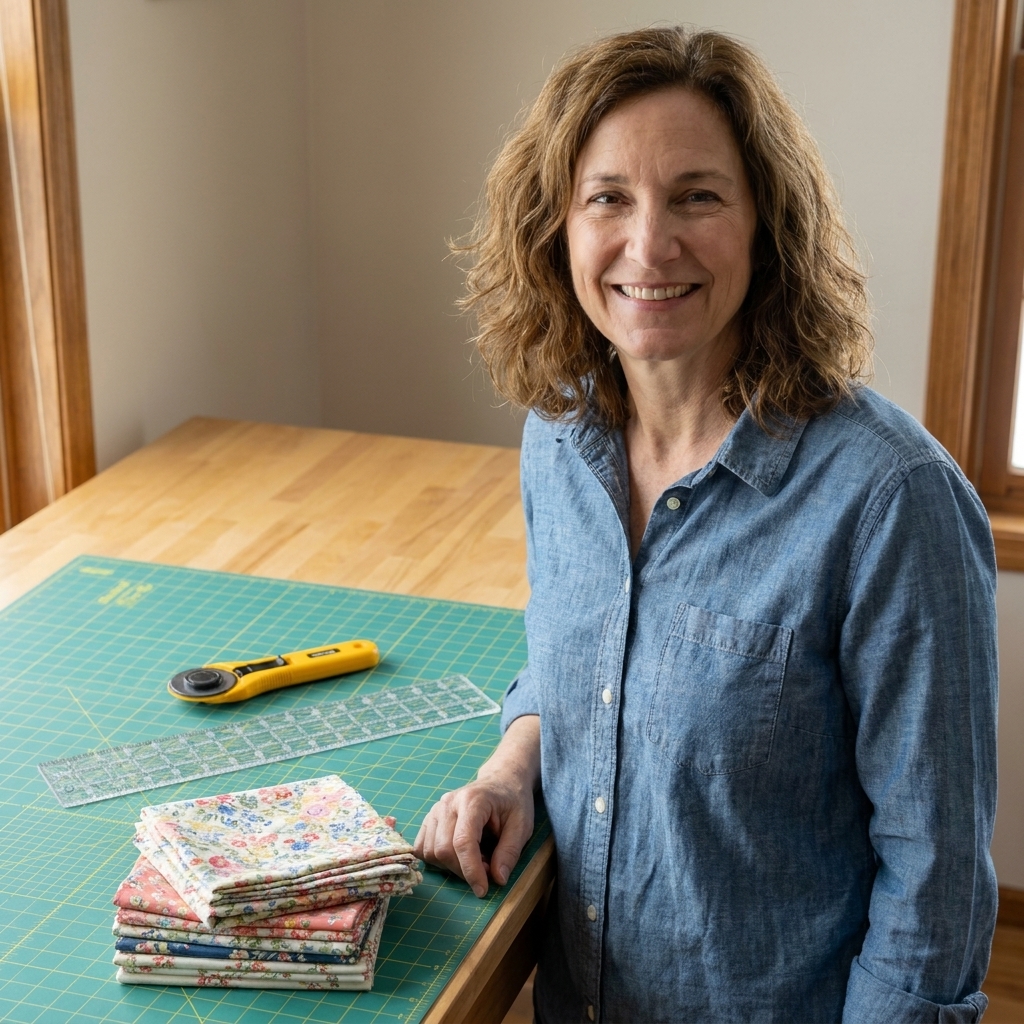
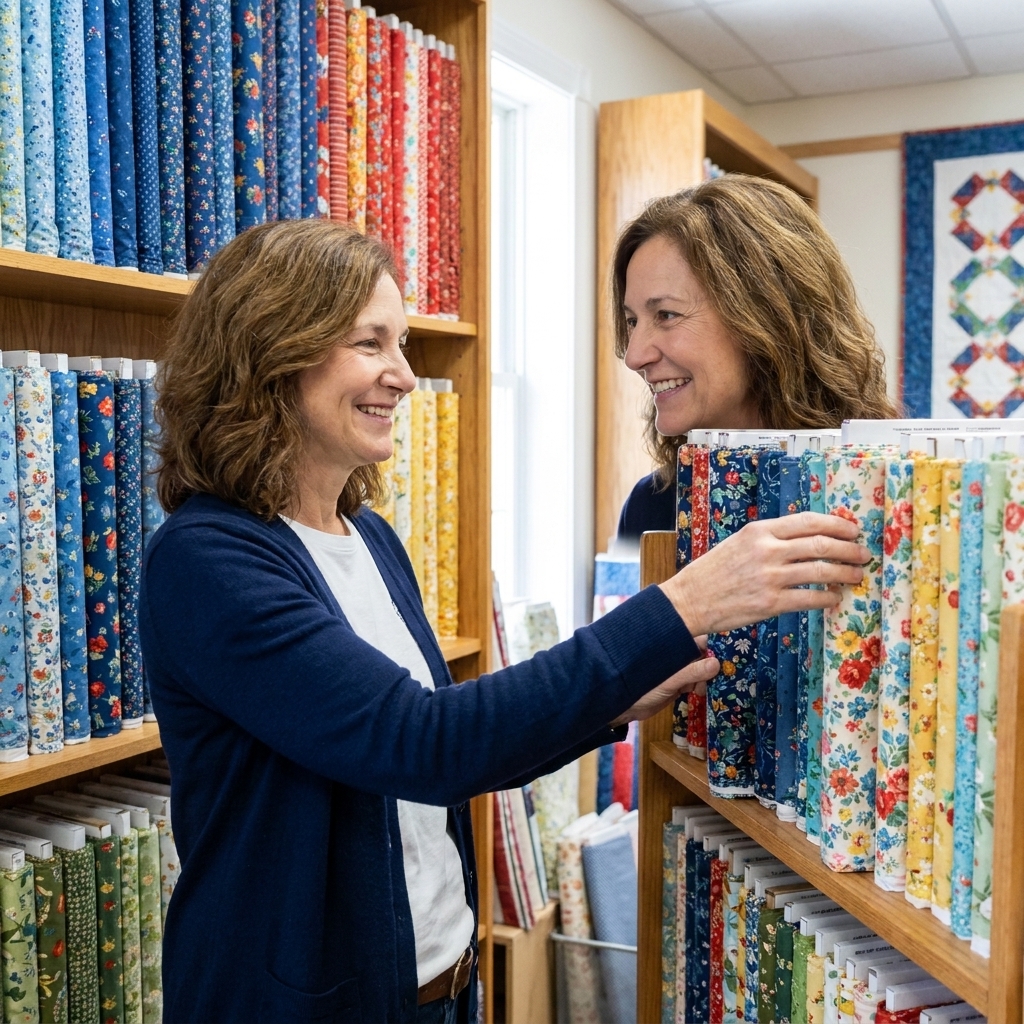
If I could pick one fabric to learn on, it would be quilting cotton. It is stable, easy to cut, easy to press, and widely available in solids and prints. It also comes in endless cute patterns, which helps when motivation is fragile.
- Why it is beginner-friendly: Crisp, stable, and rarely slippery.
- Great for: Pillowcases, tote bags, zipper pouches, aprons, simple skirts, scrunchies, quilted coasters.
- Helpful tip: Choose a medium-light quilting cotton that feels smooth and not papery. Very cheap cotton can be loosely woven and fussy.
2) Cotton poplin
Poplin is usually a plain-weave fabric, often cotton or a cotton blend. It feels a bit smoother and sometimes slightly crisper than quilting cotton, and it is commonly used for shirts and shirt dresses.
- Why it is beginner-friendly: Predictable weave, easy to press, usually behaves well under the presser foot.
- Great for: Simple tops, pajama shorts, gathered skirts, lightweight dresses, lined tote bags.
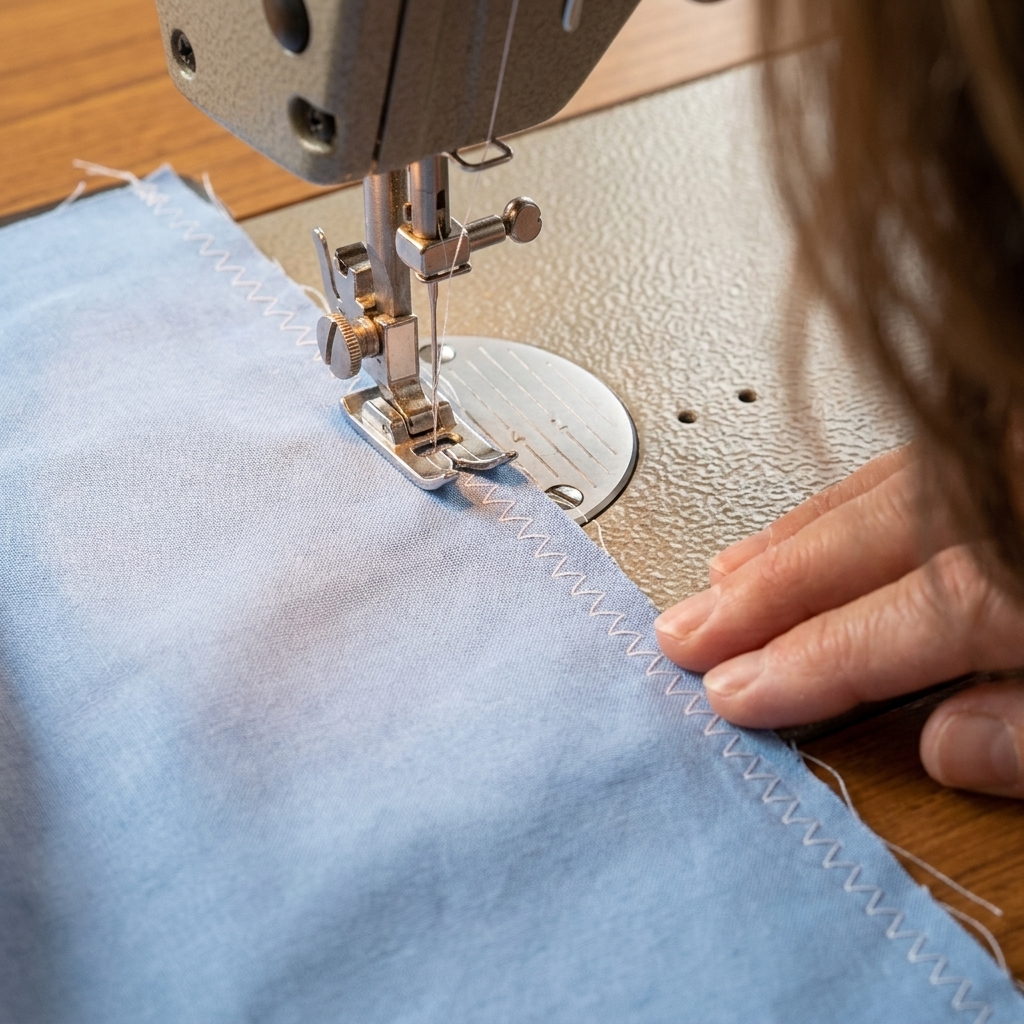
- Helpful tip: Poplin can fray a bit, so finish seams with a zigzag stitch, pinking shears, or a simple French seam if you feel adventurous.
3) Broadcloth (the common budget kind)
Broadcloth varies by store and region. The version many beginners run into first is the inexpensive poly-cotton or cotton broadcloth sold in big-box stores. It can be a solid practice fabric, especially for test runs and first garments.
- Why it is beginner-friendly: Stable and easy to cut, usually not slippery.
- Great for: Practice garments, simple costumes, basic linings, first-time button plackets.
- Heads up: Some broadcloth can feel stiff or less breathable. It is still great for learning technique.
4) Linen (and linen blends)
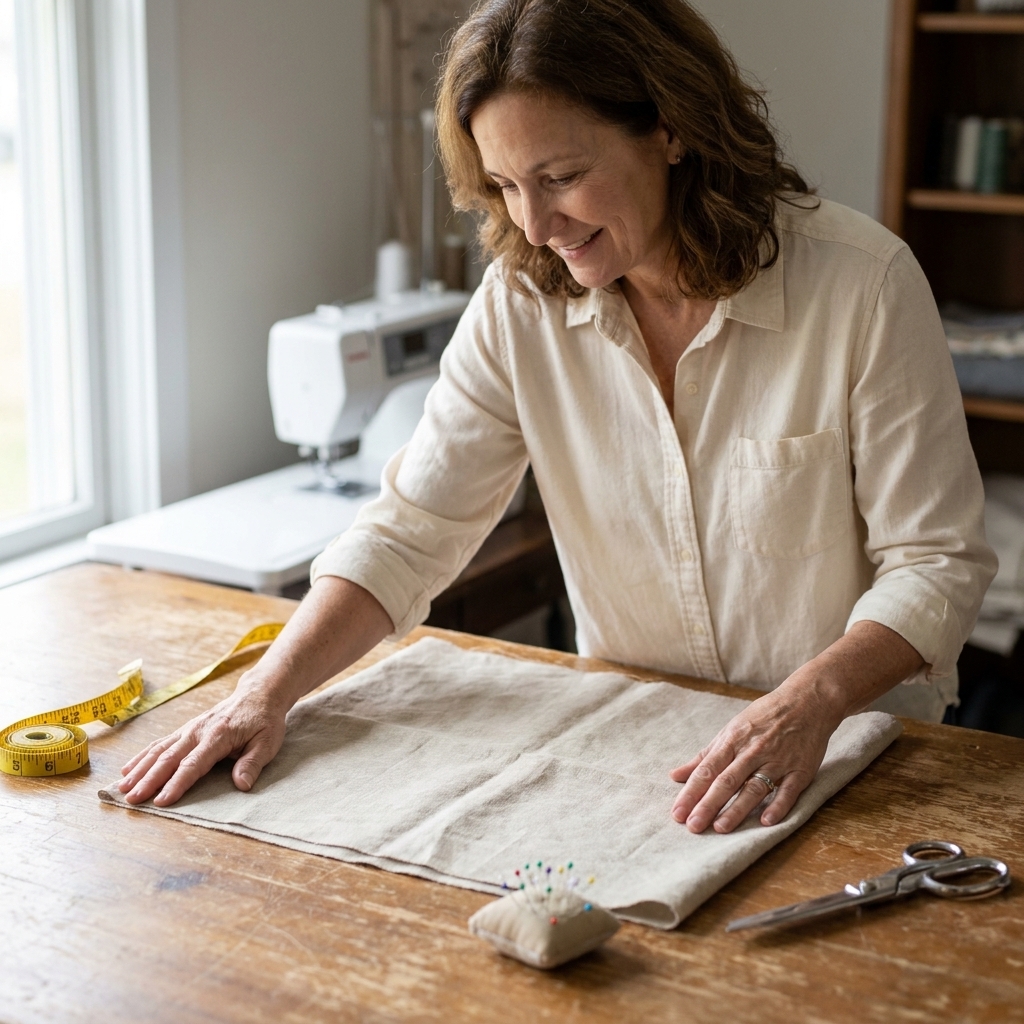
Linen sounds fancy, but it is honestly a joy to sew once you pick the right weight. It presses beautifully and does not usually wiggle around on you like slippery fabrics do.
- Why it is beginner-friendly: Stable, presses like a dream, and stays put while you stitch.
- Great for: Relaxed pants, simple dresses, aprons, tea towels, unlined summer skirts.
- Helpful tip: Linen frays, so plan on a simple seam finish (zigzag, serged, or French seams). For your first go, choose medium-weight linen or a linen-cotton blend. Very lightweight linen can shift, and very heavy linen can get bulky at seams.
5) Canvas (light to mid) and cotton duck
If you want to make something sturdy like a tote bag, canvas is your friend. For beginners, I recommend starting with a lighter canvas rather than upholstery-level thickness.
- Why it is beginner-friendly: It is stable and does not stretch much, so seams stay where you put them.
- Great for: Tote bags, tool rolls, simple aprons, floor cushions, storage bins.
- Helpful tip: Use a fresh needle and slightly lengthen your stitch if your seams look too dense. Needle size is usually 90/14 to 100/16 depending on thickness (some lighter canvas is happy with 80/12).
6) Felt (the easy craft shortcut)
Felt is not for every project, but it is a confidence booster because it does not fray. That means you can skip some finishing and focus on cutting and stitching.
- Why it is beginner-friendly: No fraying, easy to handle, simple edges.
- Great for: Ornaments, soft toys, pincushions, small organizers.
- Helpful tip: Craft felt is fine for practice, but wool-blend felt is sturdier and nicer to sew. Care can vary, so follow the bolt label if you plan to wash the finished item.
7) Flannel (with one little caution)
Flannel is cozy and usually easy to sew, especially for pajama pants and baby blankets. It can stretch a tiny bit on the bias and it can shrink a lot, so prewashing really matters here.
- Why it is beginner-friendly: Soft, not slippery, generally stable.
- Great for: Pajamas, receiving blankets, simple lounge shorts, cozy pillowcases.
- Helpful tip: Prewash and dry it the way you plan to launder the finished item. Flannel loves to shrink.
Fabrics to save for later
This is not a permanent ban. These fabrics are lovely, and you can absolutely sew them successfully with the right tools and a little practice. They just demand skills you probably have not built yet, like controlling stretch, keeping slippery layers aligned, and choosing specialty needles and stitches. (Things like a walking foot, spray starch, tissue paper, and basting become your best friends.)
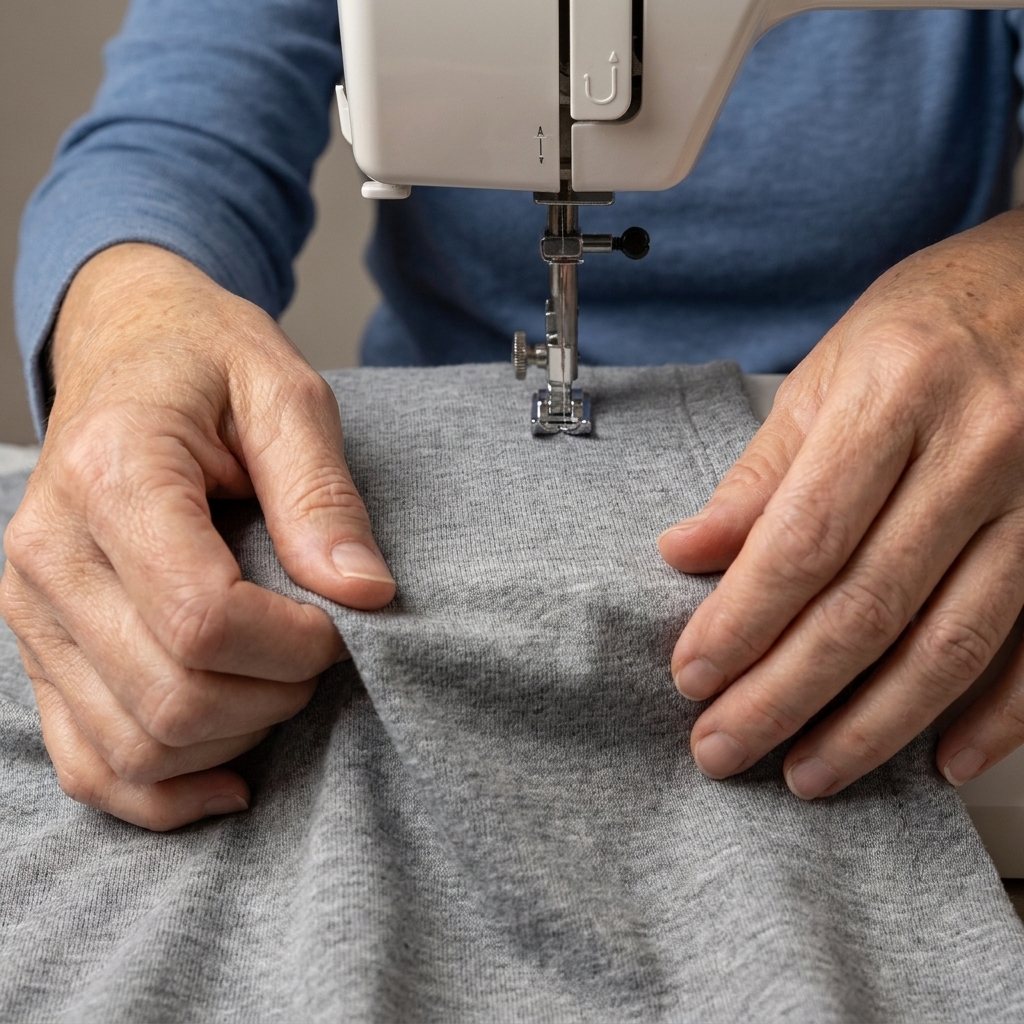
Stretch knits (jersey, rib knit, spandex blends)
Knits are comfortable and popular, but they can wave at hems, stretch out while you sew, and make seams look wobbly until you learn a few tricks.
- Why beginners struggle: They stretch while being cut and stitched, so pieces can end up different sizes.
- Common problems: Lettuce-edge hems, popped stitches, stretched necklines.
- Save it for later when: You are comfortable testing stitches on scraps and using a stretch needle or ballpoint needle.
Shifty fabrics (satin, silk charmeuse, rayon challis)
These fabrics love to scoot, shift, and slide right when you need them to behave. Rayon challis is not slippery in the same way satin is, but it can be very drapey and shifty, and it can grow on the bias.
- Why beginners struggle: Layers shift, seams pucker, and cutting accurately is harder.
- Common problems: Twisty seams, uneven hems, stretched edges.
- Save it for later when: You feel confident with careful pinning, basting, and pressing as you go.
Sheer fabrics (chiffon, organza, georgette)
Sheers show everything, including every slightly crooked seam and every thread tail you forgot to trim. They also tend to shift and snag.
- Why beginners struggle: Hard to cut, hard to see, easy to distort.
- Common problems: Pulled threads, puckered seams, rippling edges.
Textured and fuzzy fabrics (sweater knits, boucle, faux fur)
These can be bulky and messy, and the texture can hide your seam line as you sew. Faux fur also sheds everywhere, including places you did not know fabric could go.
- Why beginners struggle: Bulky seams, hard-to-match edges, lots of shifting.
- Common problems: Uneven seam allowances, skipped stitches, lumpy corners.
Leather, vinyl, and pleather
These materials are less forgiving because every needle hole is permanent. They can also stick to your presser foot.
- Why beginners struggle: Cannot unpick without leaving marks, needs specialty tools and settings.
- Common problems: Dragging, uneven stitches, permanent oops holes.
Very thick fabrics (upholstery fabric, heavy denim)
Thick fabric is not hard because you are doing something wrong. It is hard because it is thick. Multiple layers can overwhelm a basic machine and cause skipped stitches or broken needles.
- Why beginners struggle: Bulk at seams, hard to press flat, can be tough on needles.
- Common problems: Uneven topstitching, broken needles, jammed fabric at thick joins.
Quick fabric cheat sheet
| Fabric | Beginner-friendly? | Why | Good first projects |
|---|---|---|---|
| Quilting cotton | Yes | Stable, easy to press and cut | Tote bag, pillowcase, apron |
| Cotton poplin | Yes | Smooth, predictable sewing | Skirt, simple top, pajamas |
| Linen (midweight) | Yes | Presses well, holds shape (finish seams) | Tea towel, relaxed pants |
| Canvas (light to mid) | Yes | Does not slip or stretch much | Tote, storage bin |
| Flannel | Mostly | Easy handling, but shrinks | PJ pants, baby blanket |
| Jersey knit | Later | Stretch needs special handling | T-shirt once comfortable |
| Satin or silk | Later | Shifts easily, shows mistakes | Blouse when ready to baste |
| Chiffon | Later | Shifts, snags, very fussy | Special occasion wear later |
| Leather/vinyl | Later | Needle holes are permanent | Small accessories after practice |
Needles and thread basics
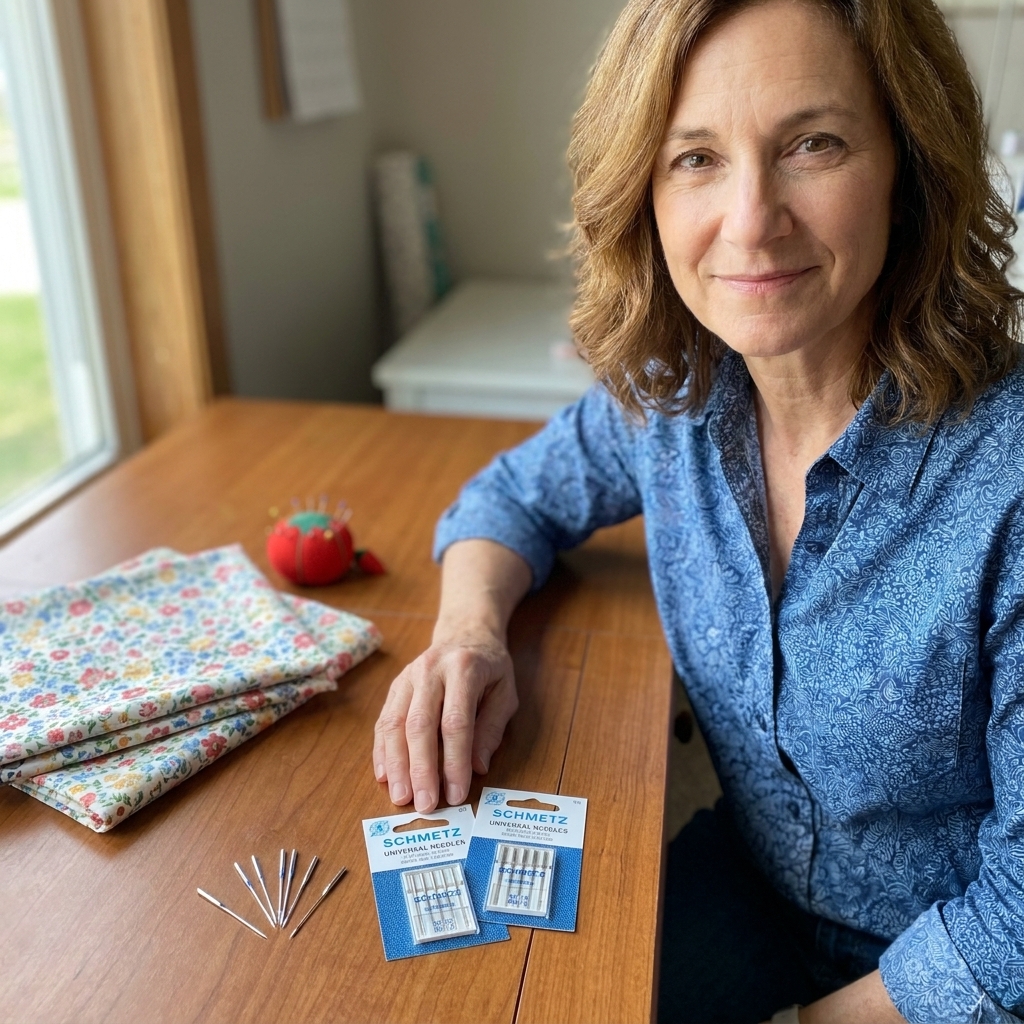
If the fabric is fighting you, the fix is often boring: a fresh needle and decent thread.
- All-purpose thread: A good-quality all-purpose polyester thread works for most beginner projects.
- Quilting cotton, poplin, broadcloth: Universal needle 80/12 is a great starting point.
- Linen: Universal needle 80/12 or 90/14, plus a seam finish to tame fraying.
- Flannel: Universal needle 80/12 or 90/14 depending on thickness.
- Canvas and duck: Universal or denim needle 90/14 to 100/16 depending on thickness.
- Knits (later): Ballpoint or stretch needle.
How to buy fabric for your first projects
Pick the fabric after you pick the project
Beginner win: match the fabric to what you are making. A tote bag likes canvas or quilting cotton. Pajamas like flannel or poplin. A flowy skirt likes a fabric with drape, but you can still choose a friendly one like cotton poplin for your first try.
Start with solids or small prints
Large stripes and bold plaids are adorable, but they require pattern matching. Save that for later. Right now, you want your brain power going toward seam allowances and straight stitching.
Buy a little extra
Not because you will fail, but because you are learning. Extra fabric means you can test stitches, practice buttonholes, and re-cut a piece if you accidentally flip it. (Ask me how I know.)
Check the feel and the weave
In-store, pick it up. Does it feel stable, or does it droop dramatically? Hold it to the light. Can you see lots of tiny holes between threads? If it looks loosely woven, it may shift more and fray more.
One grain tip that helps a lot
Some fabrics feel like they are growing and warping because you are accidentally stretching them on the bias (the diagonal direction of the fabric). Early on, handle cut pieces gently and let the fabric rest flat on the table instead of hanging off the edge.
Prewash and pressing
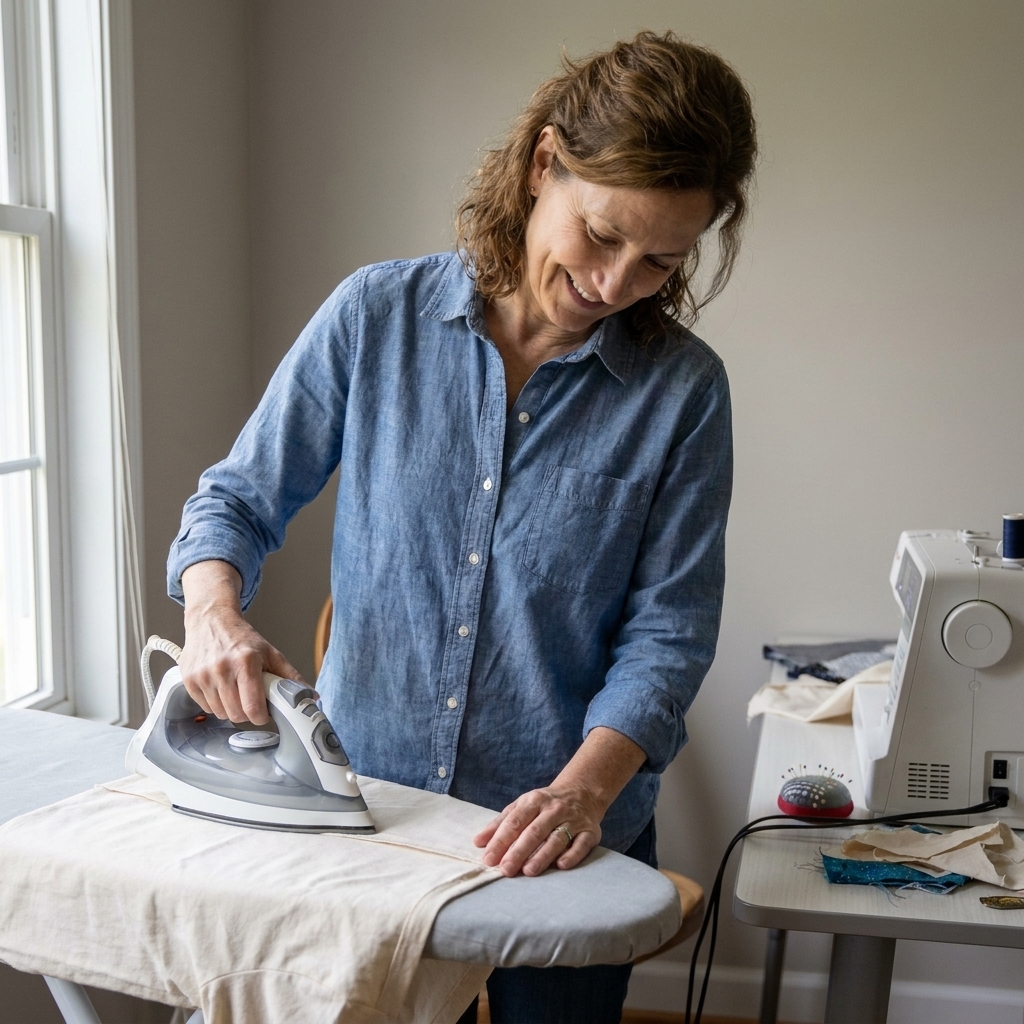
If you take nothing else from this article, take this: prewash your fabric the way you will wash the finished item. Cotton, linen, and flannel can shrink. Some fabrics also soften and relax after washing, which changes how they behave.
- Wash and dry before cutting (especially for cottons, linen, flannel).
- Press before cutting so your pattern pieces sit flat.
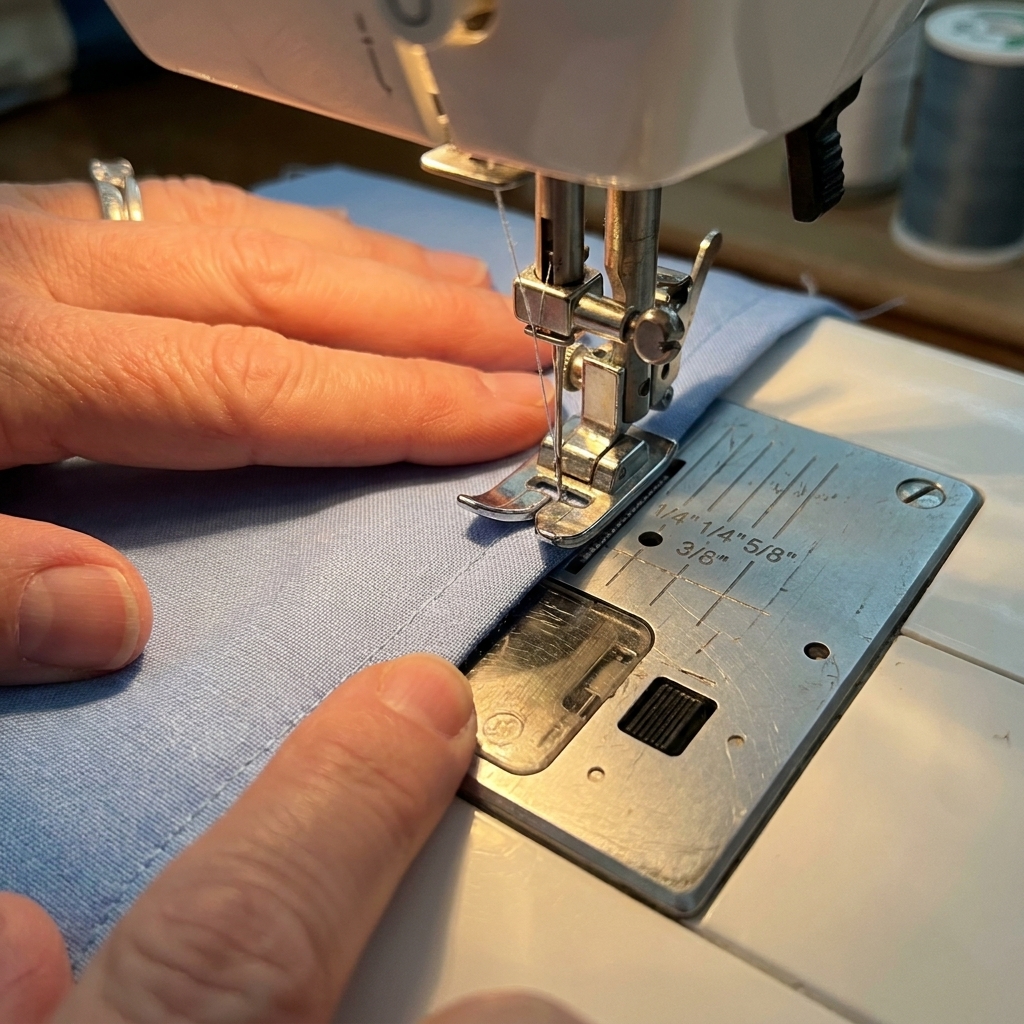
- Press as you sew, not just at the end. Your seams will look instantly more professional.
A small caveat: some specialty fabrics are not meant to be laundered the usual way, and some fabrics can be damaged by high heat. When in doubt, follow the care instructions on the bolt, and test on a small swatch.
Easy fabric picks for first projects
- Drawstring bag: Quilting cotton, poplin, or light canvas
- Pillowcase: Quilting cotton, poplin, or flannel
- Tote bag: Canvas, cotton duck, or quilting cotton with interfacing
- Apron: Linen blend, canvas, or quilting cotton
- Simple gathered skirt: Cotton poplin, quilting cotton, midweight linen
- Reusable napkins: Linen or quilting cotton
- Scrunchies: Quilting cotton, poplin, lightweight linen
FAQ
Is it okay to learn on old sheets or thrifted fabric?
Yes, with a small caveat. Bedsheets can be fantastic practice fabric, especially cotton percale. Just watch out for very thin, worn areas and blends that are extra slippery. Thrifted fabric is great too, but prewash it and check for weak spots and stains before you invest hours into a project.
What is the easiest fabric to sew on a basic home machine?
Quilting cotton is the most reliable start-here fabric on nearly every home machine. Cotton poplin is a close second.
What fabric should I avoid for my very first garment?
If you want a happy first garment experience, skip shifty satin, drapey rayon challis, and super stretchy knits. Choose poplin, quilting cotton, the common budget broadcloth, or midweight linen instead.
How do I know if a fabric is too slippery or shifty?
If it slides off the cutting table, shifts a lot when you fold it, or squirms when you try to pin it, it is probably going to be annoying as a first fabric. You can absolutely sew it later. Just not on day one.
My gentle recommendation
If you are standing in the fabric aisle feeling overwhelmed, pick a quilting cotton you love the look of, grab enough for a simple tote or pillowcase, and give yourself permission to learn slowly. Your seam ripper is not a symbol of failure. It is just part of the toolkit.
One calm fabric choice, one straight seam, one little project at a time. You have got this.