
If you’ve ever downloaded a “free pattern” that turned out to be one blurry page, three missing steps, and a vague suggestion to “finish neatly”… I see you. When you’re new to sewing, the pattern itself is only half the battle. The other half is clear instructions, accurate printing, and sizes that make sense.
Below is my go-to list of trustworthy websites with legitimately free sewing patterns. These are places I recommend to newer sewists because the designs are approachable, the instructions are usually solid, and you can download patterns legally from the original source without sketchy file links.
Quick checklist before you download
Free patterns are wonderful, but they still need a tiny bit of “pattern detective work” before you cut into your fabric.
- Look for a size chart (body measurements, not just “S M L”). Also check the size range so you don’t waste time downloading something that won’t work for your measurements.
- Check finished garment measurements if they’re provided. Body measurements tell you what size to choose, but finished measurements tell you how much ease (room) the design has.
- Check the format: A4/Letter print-at-home, A0 copyshop, and sometimes projector files.
- Find the seam allowance (included or not included). Don’t assume. It varies pattern to pattern, even on the same website.
- Skim the instructions before you start. If step one begins with “apply interfacing to facing” and you’ve got no idea what that means, choose a simpler pattern for now.
- Confirm it’s truly free: some sites offer a free pattern in exchange for an email signup, which is still legit as long as the designer’s clear about it.
Before you print
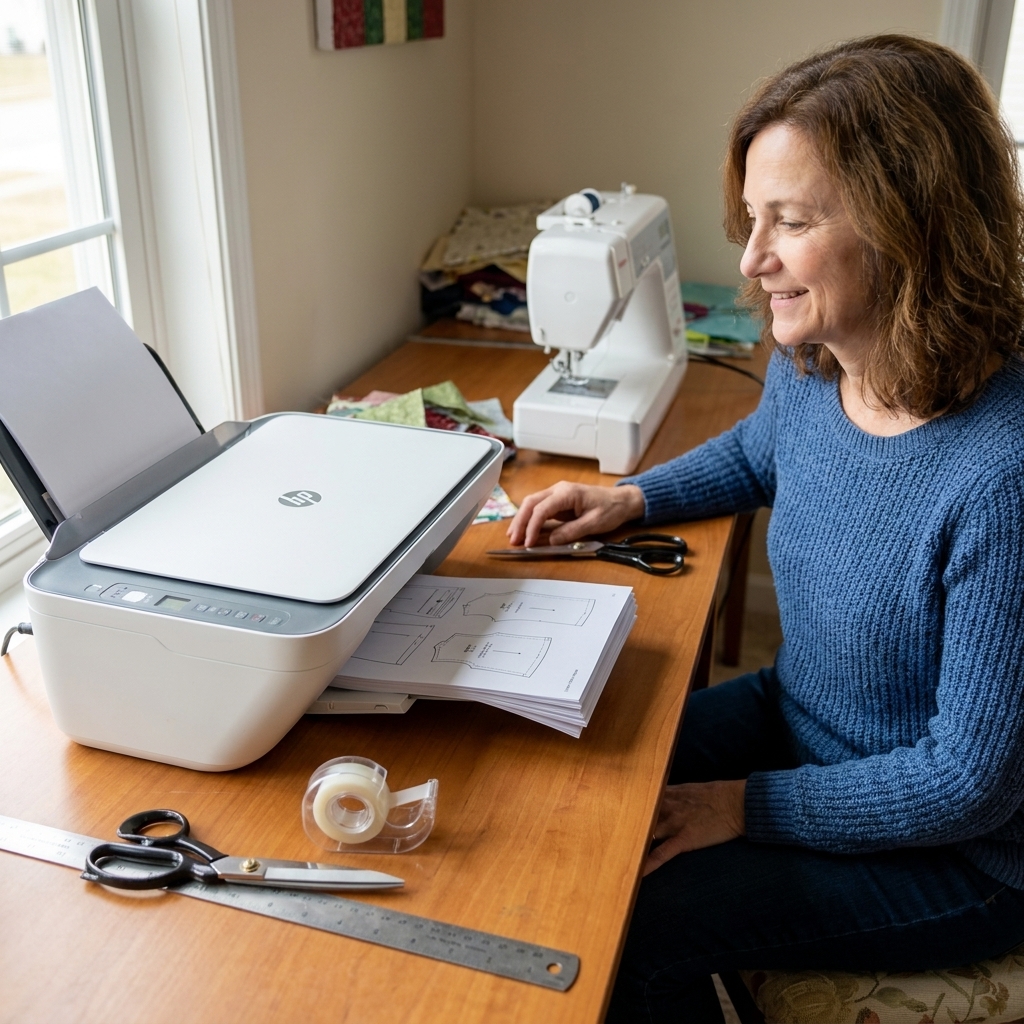
- Print one test page first and measure the test square.
- Turn off “fit to page” or “scale to fit” and print at 100 percent.
- Use layers if the PDF includes them so you can print only your size (less ink, less chaos).
- Save the assembly map if the pattern includes one. It’s the page that shows how all the tiles fit together, and it’ll save your sanity.
Indie designers with good freebies
Many indie pattern designers write patterns like they’re actually teaching you, which is exactly what newer sewists need. Availability changes, so I’m describing what these brands often offer and how to find it.
Peppermint Magazine
Peppermint’s pattern library is one of my favorite places to find modern, wearable garments. Many designs are created in collaboration with established pattern designers, so the drafting is typically reliable.
- Best for: simple dresses, skirts, tops, and relaxed wardrobe basics
- Formats: usually print-at-home PDF, and often A0 copyshop depending on the pattern
- Nice for beginners because: instructions are usually clear and the photos help you visualize each step
- Tip: double-check sizing and printing pages before you start taping
Helen’s Closet
Helen’s Closet is beloved for friendly, thoughtful instructions. The core patterns are paid, but the brand may publish free downloads and extras from time to time, like add-ons, adjustment help, or skill-building resources. To find what’s currently available, check the site’s main navigation for a section like Resources, Downloads, or the blog (labels can change).
- Best for: skill-building extras and technique practice that make your sewing look more polished
- Formats: varies by download, but typically PDF with clear instructions when it’s a pattern
- Nice for beginners because: the teaching style is calm and step-by-step
True Bias
True Bias is another solid stop for garment sewists. They may occasionally offer a free download or a limited-time promotion, and the tutorials and sew-alongs can be the hidden gem even when you’re not grabbing a full pattern.
- Best for: wardrobe staples and learning garment construction order
- Formats: varies, and freebies can rotate, so read the download page carefully
- Nice for beginners because: tutorials help fill in the “wait, how?” moments
Closet Core Patterns
Closet Core is best known for excellent technique content. Free downloads come and go, but their tutorials and sew-alongs are consistently worth bookmarking if you want your stitching to look more professional without getting overwhelmed.
- Best for: learning construction, pressing, and finishing techniques that make a project look polished
- Formats: depends on the resource, with tutorials being the most consistently available
- Nice for beginners because: the teaching is thorough without being snobby
Fabric brands with free patterns
Lots of fabric companies offer free patterns because they want you to use their fabric. I’m completely fine with that arrangement, as long as the pattern is clear and the download is legit.
Mood Fabrics (Mood Sewciety)
Mood’s free patterns are famous, and there are a lot of them. The style range is huge, from beginner-friendly to runway drama.
- Best for: trying lots of garment styles without spending money
- Formats: typically print-at-home PDFs with instructions on the post
- Nice for beginners because: instructions vary by pattern, but many include detailed steps and illustrations
- Beginner tip: choose simpler silhouettes first (elastic waist, boxy tops, uncomplicated sleeves). Some Mood patterns are more advanced than they look.
Fabrics-store.com
If you love linen (or want to), Fabrics-store has a library of free patterns that pair well with breathable, forgiving fabrics. Many are relaxed, comfortable shapes.
- Best for: linen-friendly basics like simple tops, dresses, and loungewear
- Formats: commonly print-at-home PDFs, sometimes with blog-style instructions
- Nice for beginners because: looser fit patterns can be more forgiving while you learn
Quilting cotton brands
Quilting cotton brands often publish free projects for simple makes like pajamas, skirts, tote bags, and kids items. Sometimes you’ll get a true graded PDF pattern, and sometimes it’s a tutorial with measurements and cutting diagrams. These can be fantastic first projects because quilting cotton is stable and easy to press. If you’re browsing a fabric brand’s site, look for a clearly labeled “Free Patterns,” “Projects,” or “Tutorials” section.
- Best for: beginner garments and quick accessories
- Formats: often tutorial-plus-PDF, sometimes measurements only
- Nice for beginners because: stable fabric plus straightforward construction equals fewer tears
Big brands and free offers
The big legacy pattern brands can be hit-or-miss for newer sewists depending on the pattern and the instructions. Their free offerings are also more likely to be promotional or limited-time, so I treat these as bonus options, not your main plan.
Brother
Brother publishes free projects and tutorials (often with pattern pieces or cutting diagrams) that are great for practicing your machine skills and finishing details.
- Best for: small wins like pouches, simple bags, and beginner practice projects
- Formats: usually tutorial pages with downloadable PDFs or step-by-step instructions
- Nice for beginners because: projects are designed to be approachable for newer stitchers
Simplicity, McCall’s, Butterick, Vogue
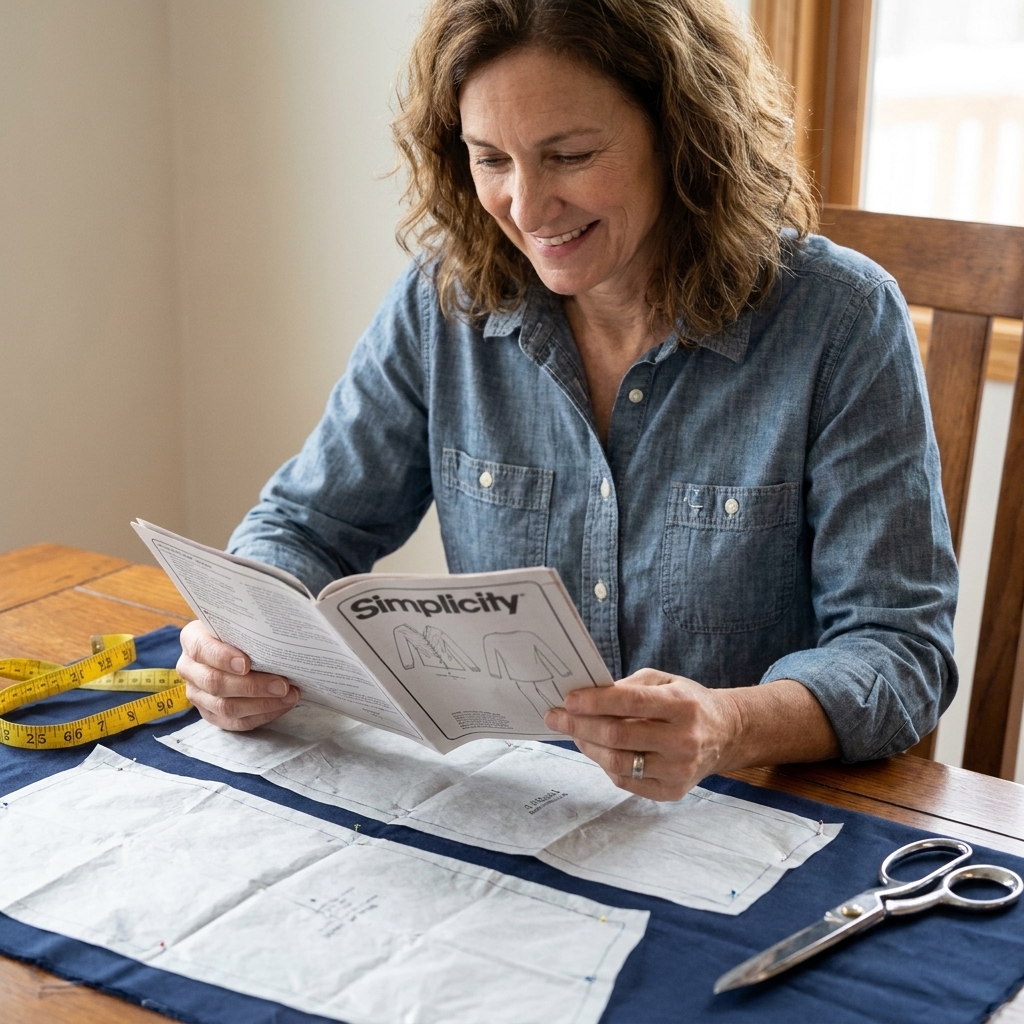
These brands occasionally run promotions that include free downloads or free-with-signup offers, and availability can be time-limited or vary by region. When you find a freebie, check finished garment measurements and recommended fabric carefully.
- Best for: classic silhouettes, costume basics, and learning to read pattern markings
- Nice for beginners because: there are lots of sew-alongs online for popular patterns
Community hubs (read carefully)
Community sites can be wonderful for discovering new designers. Just remember: quality can vary. Your best friend here is reading reviews and checking for clear photos of the finished make.
Instructables
Instructables is more tutorial-first than pattern-first, but you can find beginner-friendly projects with steps and photos.
- Best for: small accessories and practical home projects
- Beginner tip: confirm seam allowance and measurements before cutting
Independent sewing blogs
Lots of sewing bloggers offer a free pattern as a companion to a tutorial. This can be a great learning setup because you can read the whole process first, then download the pieces.
- Best for: learning one skill at a time, like zippers, elastic casings, or bias tape
- How to vet it fast: look for a clear size chart, a test square, step-by-step photos, and a download hosted by the original designer (not a repost)
Good first projects
If you’re brand new and you want a project that teaches you something without swallowing your weekend, here are reliable starter types to look for on the sites above.
- Elastic-waist skirt: teaches hemming, casings, and straight seams.
- Simple tote bag: teaches boxed corners, straps, and topstitching.
- Pillow cover: teaches accurate measuring, pressing, and clean edges.
- Boxy top: teaches basic garment construction without tricky fitting.
- Sleep shorts or pajama pants: teaches elastic waist plus seam finishing.
And if you sew something a little crooked on your first go, congratulations. You’re officially sewing. That’s what the seam ripper is for, and I say that with love and personal experience.
Legit and safe downloads
Let’s keep you away from sketchy downloads and pattern reposts. Here’s what I look for.
- It lives on a real brand or designer website, not a random file-sharing page.
- The download page clearly states it’s free and what you get (sizes, format, instructions).
- You see photos of the finished project made in real fabric, ideally on a person or in use.
- There’s a terms of use note (usually personal use). That’s a good sign the designer is legit.
- The file is a PDF and the page count makes sense. A whole dress pattern being “one page” is a red flag.
- Respect the license: don’t repost the PDF in groups or upload it to “sharing” folders. If you love it, share the original link so the designer gets the credit and traffic.
Beginner FAQ
Why do some free patterns have fewer instructions?
Some designers assume prior knowledge, especially for simple shapes. If the instructions feel too short, look for a sew-along post, video tutorial, or a pattern with more photos.
Print-at-home patterns confuse me. Any tips?
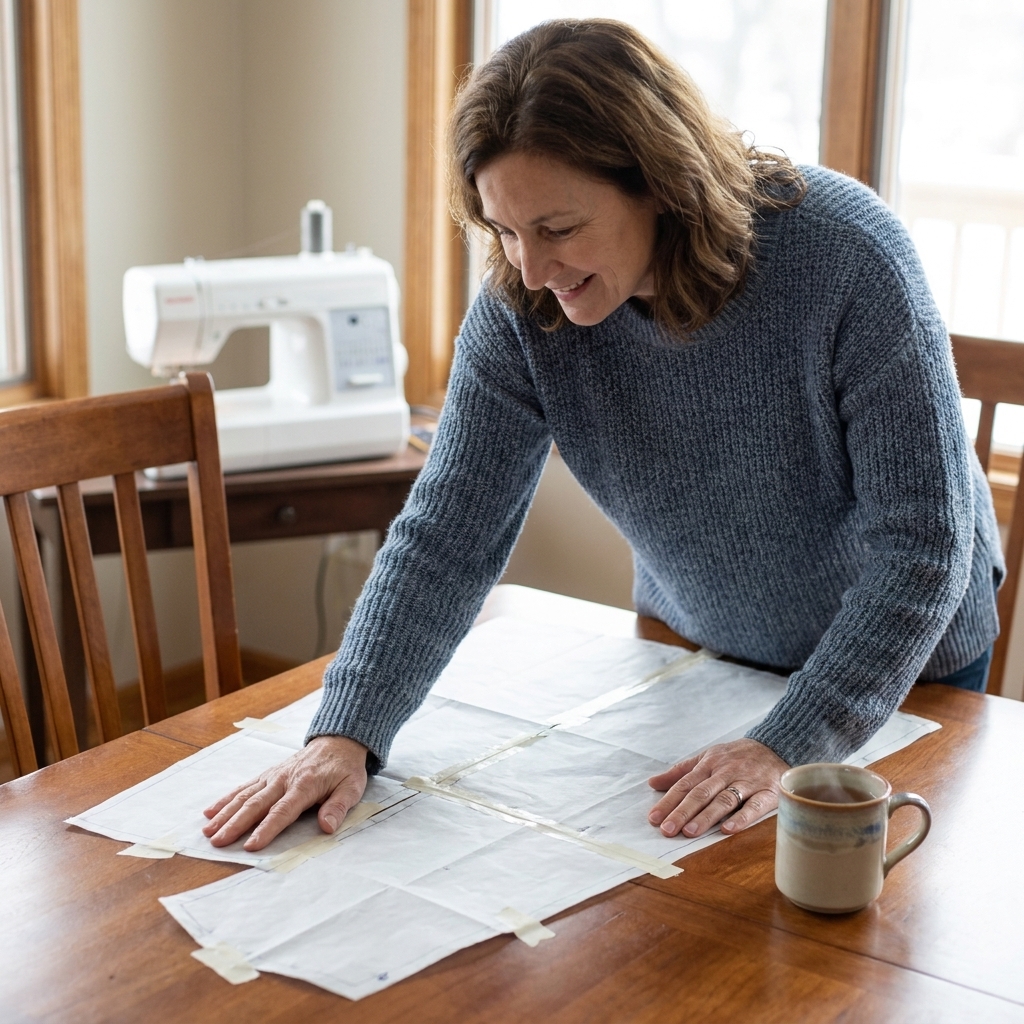
Absolutely. Print one test page first, measure the test square, and only then print the rest. When you tape pages, work on a hard floor or big table and go row by row. Put on a show and accept that taping is a slightly silly sewing ritual we all do.
Can I sell items made from a free pattern?
It depends on the designer’s terms. Many allow personal use only. If selling matters to you, look for a clear license statement on the download page or reach out to the designer for permission.
What if the fit is off?
It happens, even with paid patterns. Check that you chose the correct size using the size chart, confirm you printed at 100 percent, and compare your measurements to the finished garment measurements if provided. When in doubt, make a quick test version (a muslin) in inexpensive fabric first.
One last encouragement
You don’t need the perfect pattern to start. You need a decent pattern, a calm pace, and permission to be new at this. Choose one project that feels doable, read the instructions once all the way through, and take it one seam at a time. You’ve got this.